

In 2018, the National Mechanism for the Prevention and Combat of Torture (MNPCT), together with various local and international organizations, initiated a process to demand that Brazilian authorities fulfill their obligation to prevent, investigate, and effectively punish torture. Their goal: for Brazil to update its protocols in all these areas and bring them into line with international law.
Our Center also had the opportunity to collaborate in this endeavor.

The International Bar Association's Human Rights Institute (IBAHRI) was commissioned by the MNPCT to train its teams on torture prevention at the national level. To carry out this task, IBAHRI also wanted to involve our team.
For over two years, we traveled together to different states in Brazil, conducting training sessions on the application of the Istanbul Protocol. We discussed with prosecutors and legal and medical professionals the urgent need to improve mechanisms for identifying and reporting torture. Professionals in the field emphasized the difficulties in effectively documenting and reporting torture, a practice that—they pointed out—is entrenched and normalized in detention centers, prisons, juvenile detention centers, and psychiatric hospitals.
In the midst of this process, the MNPCT concluded that the forensic protocols in place at the time represented a major obstacle to its purpose. It was urgent to update the questions used to establish torture, given that they were based on criminal legislation from 1940. Local and international specialists identified a lack of awareness of torture as a crime and numerous difficulties in investigating it.
United Nations
Back in 2007, the UN Human Rights Council asserted that torture is a “systemic and structural” problem in Brazil.
The rapporteur
In 2016, the United Nations Special Rapporteur denounced the impunity with which torture is practiced in interrogations and detentions in Brazil, affecting mainly the Afro-descendant and LGBTI population.
Torture in prisons
Brazil has the third-highest prison population in the world, a position it has held for the past decade. As of May 2022, the number of people incarcerated exceeded 919,000.
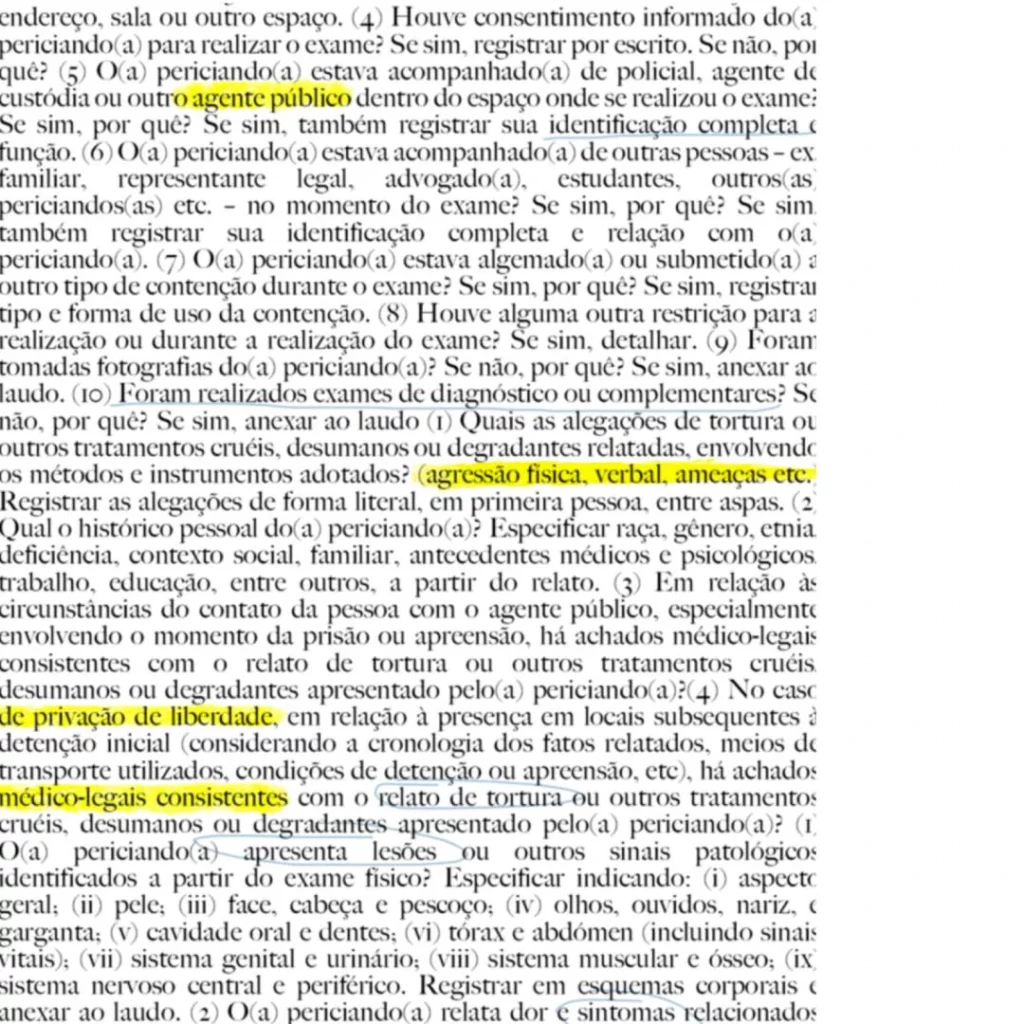
At the end of 2018, as a result of the process, the MNPCT came up with a final forensic protocol proposal which it presented to the Ministry of Justice.
It was a set of questions that - now yes - They complied with international regulations on prevention and punishment of torture
The 'Sala Vermelha' case‘
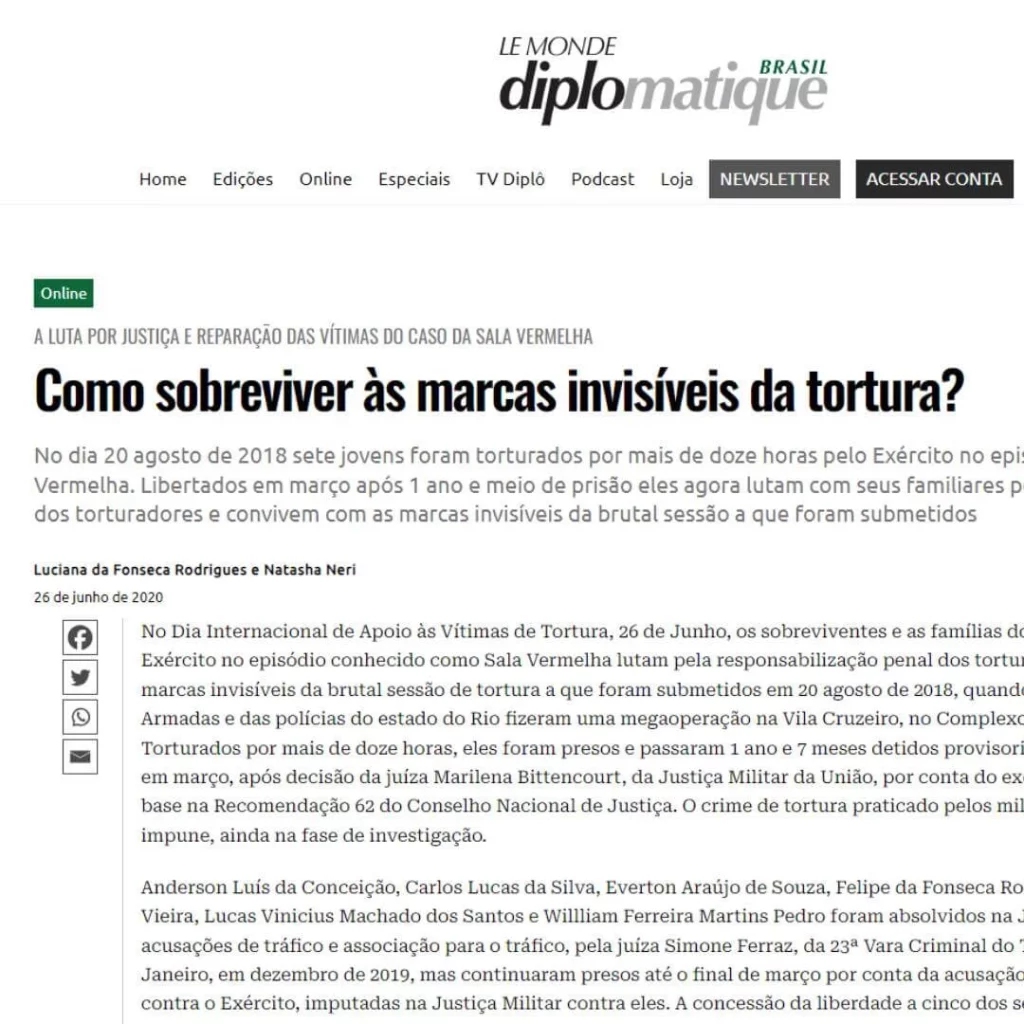
In August of that same year, seven young men were tortured for more than 12 hours by the Army in an incident known as the "Sala Vermelha" (Red Room), named for the color of the room where the abuse took place. The young men were arrested during a large-scale operation in Vila Cruzeiro, north of Rio de Janeiro.
After spending a year and seven months in pretrial detention, the group was acquitted after a detailed report based on the Istanbul Protocol proved they had been tortured by the Army. This set a historic precedent, as it was the first expert report in the country to be based on this manual.
Against torture in Brazil
In 2021, after years of work, the MNPCT succeeded in getting the National Council of Justice of Brazil to approve the performance of forensic examinations For suspected cases of torture or ill-treatment, following the recommendations of all involved entities. The implementation of this new mechanism for documenting and reporting torture marked a historic step in the country. We are proud to have contributed to such a significant change through technical support.
However, despite this significant progress, the arrival of Jair Bolsonaro to power led to the progressive erosion of all the mechanisms adopted to date. In March 2022, various local organizations denounced the dismantling of the National System for the Prevention and Combat of Torture before the UN. Now, with the change of government following the presidential elections of October 2022, it is a particularly relevant moment to understand what steps the new administration will take regarding the prevention of torture.

Services
We document human rights violations and support their victims
We offer therapeutic care to people affected by political violence and prepare expert reports as an instrument of defense and denunciation.
Trajectory #2
Exposing torture in Mexico
A group of experts specializing in the Istanbul Protocol undertook an investigation in 2019 to audit the work of the State's forensic experts.