
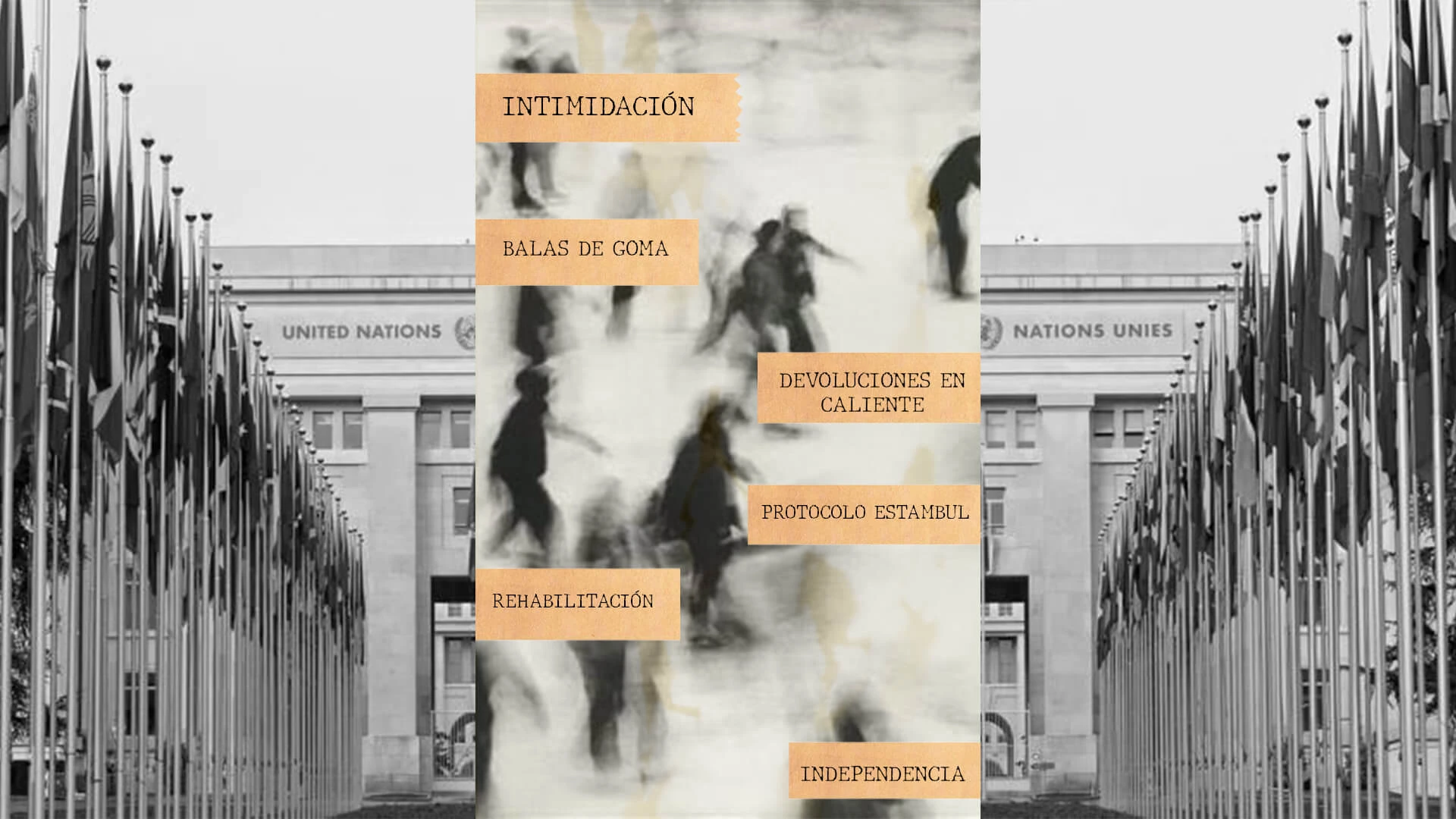
On July 20 and 21, 2023, at the UN headquarters in Geneva, Spain presented its seventh periodic report to the Committee against Torture on the implementation of the Convention against Torture and Other Cruel, Inhuman or Degrading Treatment or Punishment in the country. Therefore, a network of civil society organizations submitted a document to the Committee, known as the “Shadow Report,” which details the main violations committed by the State in relation to its failure to comply with its international human rights obligations.

The document, over 80 pages long, identifies violations related to migration, detention centers, police repression, historical memory, and the investigation and documentation of torture. All of these violate the Convention's mandate of absolute prohibition of torture. Among their observations regarding police actions, the organizations denounce the use of highly damaging riot control equipment y potentially lethal, such as rubber bullets at demonstrations and at the border; the deficiencies in the police identification in their actions in public spaces; the lack of transparency regarding the protocols for action of each force; or the lack of an independent oversight mechanism to properly investigate and monitor allegations of abuse, including those related to police racism. In this regard, international organizations and social entities have repeatedly denounced the practice of raids based on ethnic and racial profiling by the Security Forces and Corps, something that the Spanish State has ignored.
Furthermore, the organizations state that Spain is violating the principles of the Convention by allowing the hot returns in Ceuta and Melilla, arguing that International Law not only prohibits the collective and summary expulsions, but also the transfer of a person to a jurisdiction where they may be at risk of human rights violations. In this regard, the organizations denounce various cases of ill-treatment and excessive use of force by the border authorities, Highlighting the events of June 24, 2022, when, following an operation by Spanish and Moroccan security forces, at least 470 people were summarily returned. A year later, 77 disappearances, 37 deaths, and countless injuries have been documented in the aftermath.
The report also states that the prison oversight, investigative, and inspection courts are not serving to investigate and stop cases of ill-treatment and torture that occur within the prisons. prisons. Among many other measures, they demand guarantees so that the complainant can access a legal assistance from the very beginning; access to the video camera recording, This material is very difficult to access and is also routinely deleted every 30 days. Furthermore, to ensure a fair process, the organizations demand that incarcerated individuals have access to a medical report of their injuries prepared by an independent professional, not by the prison's own medical service. Currently, when someone requests an independent clinical evaluation, it can take weeks, meaning that many of the reported injuries may have already disappeared.
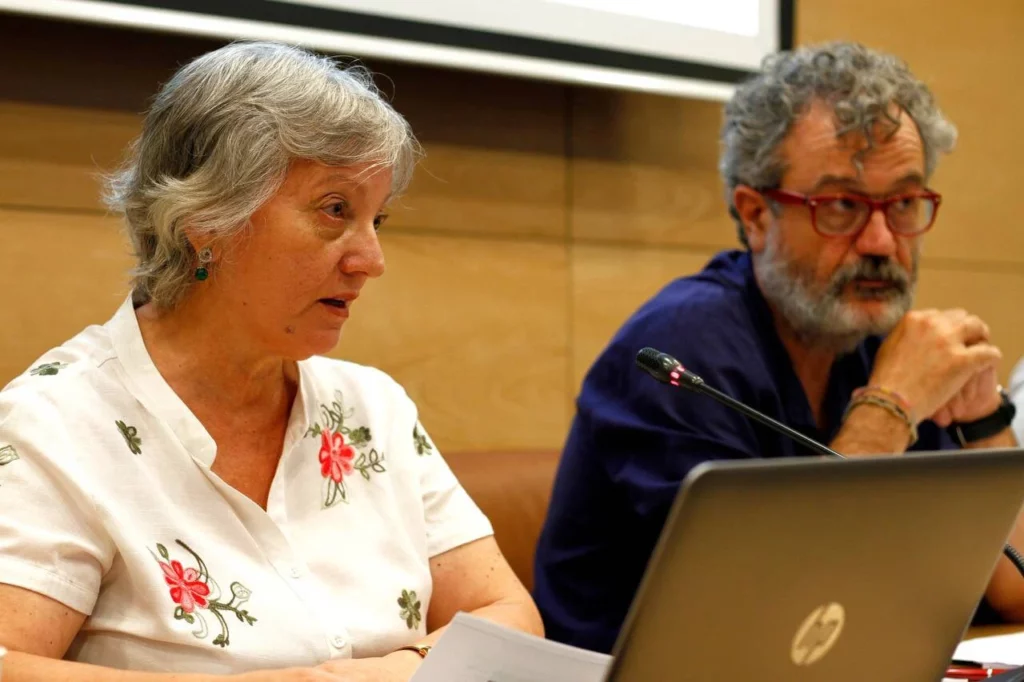
Regarding the documentation and investigation of torture cases, the organizations highlight that Spain, despite having 12 condemnations from the European Court of Human Rights for failing to investigate the allegations of torture, It shows no significant improvements in this area. Today, the State does not officially recognize the Istanbul Protocol, The UN's benchmark instrument for investigating and documenting torture is lacking, and therefore, forensic services operating within the courts do not have clear standards for evaluating torture allegations and, consequently, their needs. This deficiency is compounded by the lack of reparations and rehabilitation policies for survivors.
The civil society organizations that signed the report demand that the Spanish State comply with the precepts of the Convention against Torture, resolving those legal, administrative and practical issues that lead to human rights violations, and that in some cases, infringe the international law.
We filed a complaint with the UN
A group of civil society organizations, including the Centre per la Defensa dels Drets Humans, Iridia, the Asociación Libre de Abogadas y Abogados, ALA, l'Institut de Drets Humans de Catalunya and the Centro Sira, among others, traveled to Geneva last Tuesday, July 18, to present orally to the United Nations Committee Against Torture the contents of a shadow report, which includes serious deficiencies and human rights violations committed in the Spanish State.
The report is presented as part of the review that the Committee conducts periodically (every four years) of countries that have ratified the Convention against Torture. This week (July 20 and 21) it is Spain's turn, a state that ratified the convention in 1987. The report compiles violations of the Convention against Torture in various settings, such as borders, prisons, immigration detention centers, and public spaces; and in different areas such as historical memory, healthcare, and the use of force by the police.
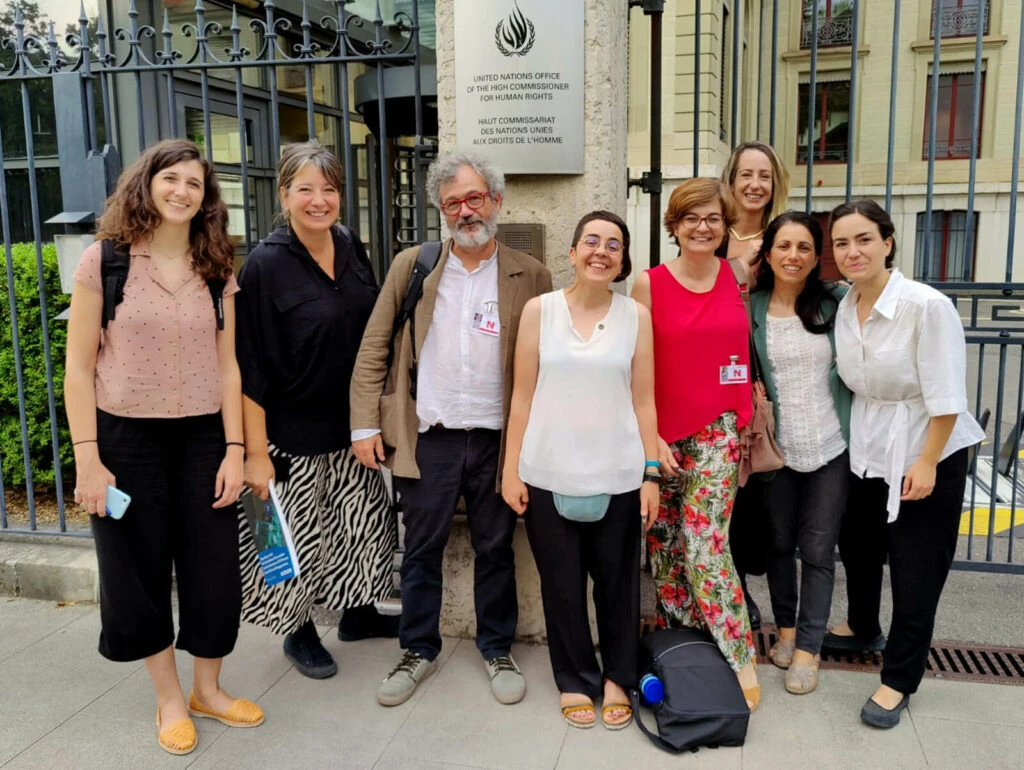
Among the demands made by the organizations to the Spanish State are several that stand out, including: banning rubber bullets; implementing the full identification of all members of the State Security Forces; creating an independent and effective police oversight mechanism; supporting improved medical care for torture victims; ending mechanical restraints and prolonged isolation in prison; and promoting a comprehensive state policy on historical memory. The document also highlights the urgent need to respect human rights at the southern border and, therefore, to halt the summary returns that occur systematically at the border, and to investigate and hold accountable those responsible for the events of June 24, 2022, when, following actions by Spanish and Moroccan security forces in the border area, at least 470 people were summarily returned.
The signatory organizations call on the State to comply with the provisions of the Convention, resolving those legal and practical issues that lead to human rights violations and breach both this treaty and, in some cases, international law. The organizations hope that the body will take into account the recommendations and concerns raised in the report when it reviews the country on July 20, 2023.
Services
We document human rights violations and support their victims
We offer therapeutic care to people affected by political violence and prepare expert reports as an instrument of defense and denunciation.
Trajectory #8
The first victim of torture during the Franco regime to testify in a Spanish court
After six years of legal battles in Spanish courts and 100 lawsuits filed, a Spanish court, for the first time, took a statement from a torture victim in the context of crimes against humanity. The Sira Center contributed an expert report to the case, documenting the impact on the plaintiff.