
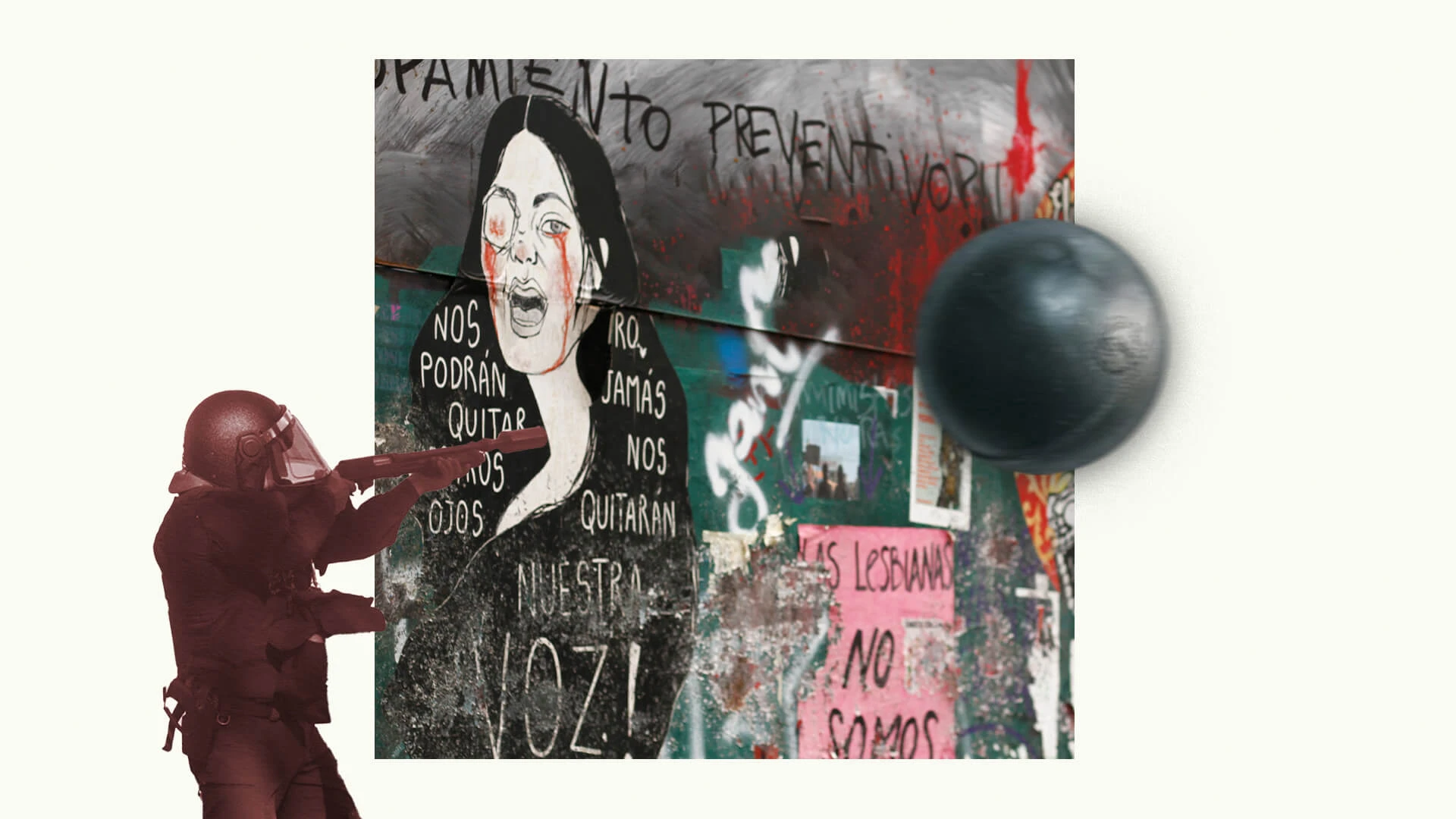
Esther Quintana lost her left eye after being hit by a rubber bullet in 2012. The Sira Center assessed her case to document the psychosocial impacts this attack had on her life.
Esther Quintana was hit by a rubber bullet on November 14, 2012, fired by the Mossos d'Esquadra (Catalan police). It happened during a general strike in Barcelona. Esther, who at that time had had to stop running her café as a result of the economic crisis, went to the manifestation She was with a companion. Thinking the strike was over, she headed to the bus stop to go home. That's when she noticed a police deployment that surprised her. When Esther turned to look for her partner, who was behind her, she heard a loud explosion and felt an impact that stunned her. Shortly after, she found her face covered in blood. She had lost her left eye.
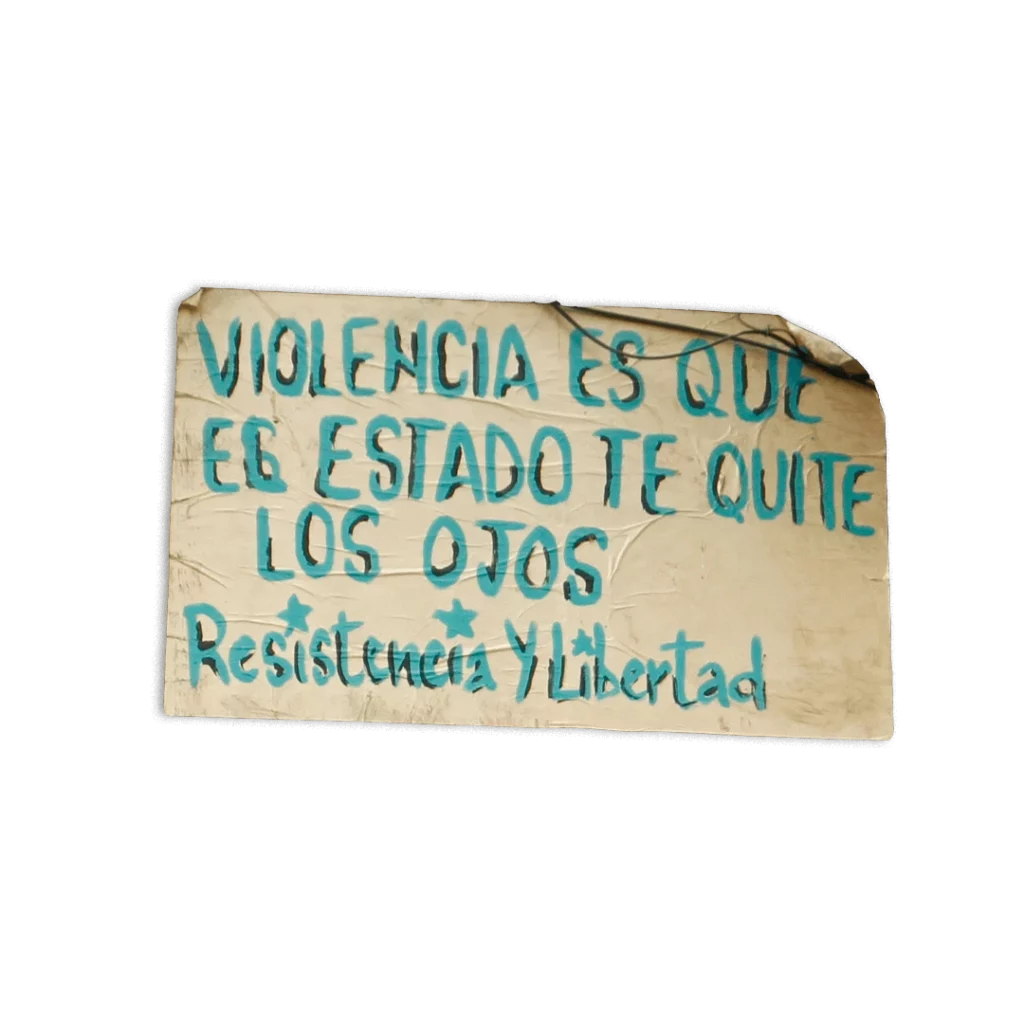
In 2016, the officers accused of firing the projectile were acquitted, as it could not be determined which one pulled the trigger or whether the bullet was rubber or foam. However, the judges did find it proven that a police officer fired the shot, violating protocol. Previously, in 2015, the Catalan government publicly acknowledged its responsibility by paying €261,000 in compensation, considering that Esther lost an eye during a police operation.
Since then, Quintana has undergone six operations and has become one of the visible faces in the fight to ban rubber bullets and foam projectiles.
Psychosocial impacts
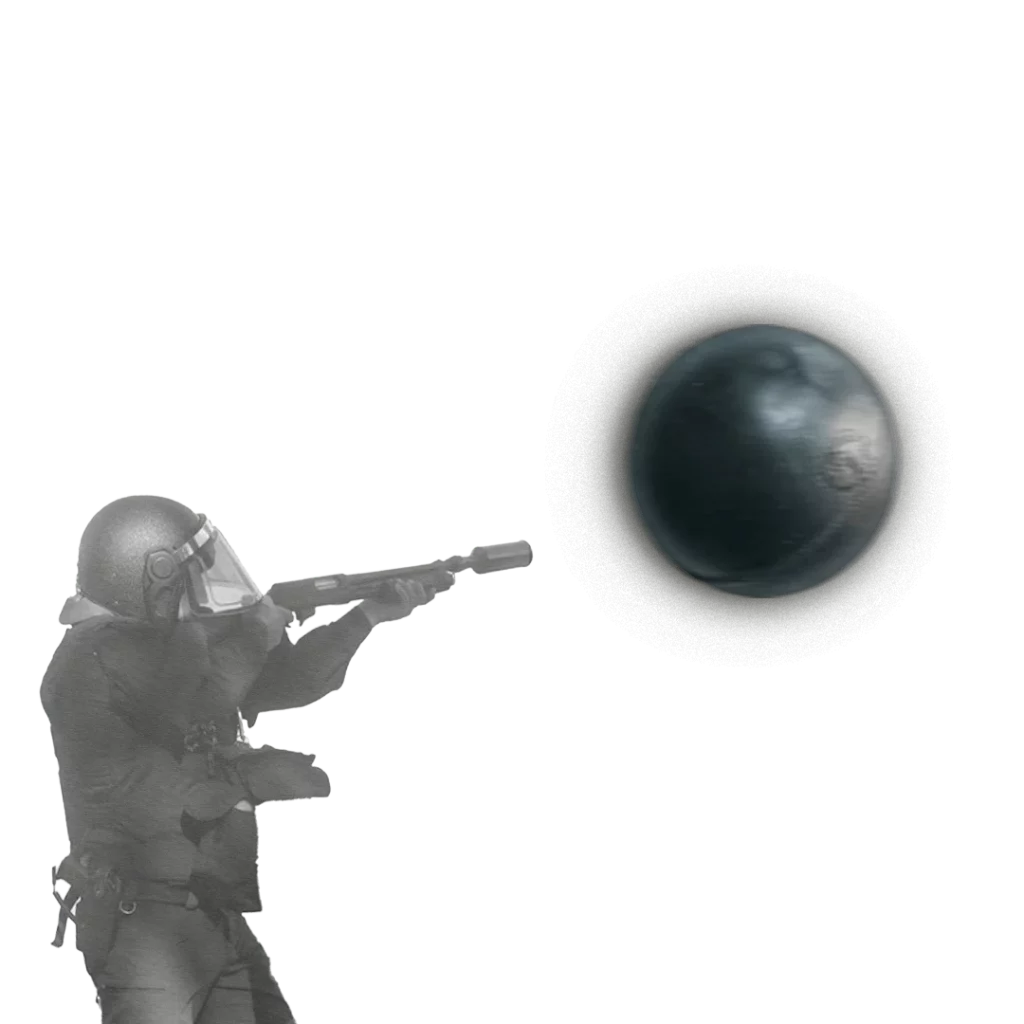
The loss of an eye caused Esther a series of physical and psychological traumas, which we documented in an expert report at the request of her defense. At the time of the evaluation, she was found to be suffering from post-traumatic stress disorder, including anxiety, re-experiencing the trauma, mistrust, and insecurity.
On a physical level, Esther experienced difficulties due to vision loss and a reduced field of vision. She also had trouble navigating in low-light environments and performing fine motor tasks, among other challenges.
The study also identified repercussions on her body image and self-perception: a persistent feeling of vulnerability—resulting from the successive surgeries and rehabilitations she was forced to undergo—which compelled her to provide assistance in her daily life. Ultimately, the subject of the evaluation exhibited impairments in her outlook on life, her identity, and her belief system regarding herself, others, and the world.
Protesting shouldn't cost an arm and a leg.
Since 2000, at least 11 people have lost sight in one eye due to the impact of rubber or foam bullets. In 2012, Iñigo Cabacas He died after being shot in the head. The use of rubber bullets was also a determining factor in the deaths of 15 people in the Tarajal beach during an operation by the Civil Guard in Ceuta, in 2014.
Protesting shouldn't cost an arm and a leg. Sign this manifesto promoted by our comrades at Iridia Centre and Stop Rubber Bullets to ban rubber and foam bullets:
Services
We document human rights violations and support their victims
We offer therapeutic care to people affected by political violence and prepare expert reports as an instrument of defense and denunciation.
Trajectory #3
Enforced Disappearance: the suffering of families is torture
In December 2022, Pau Pérez Sales, clinical director of the Sira Center and editor-in-chief of the Torture Journal, presented a special issue of the journal to the United Nations Working Group on Enforced or Involuntary Disappearances (WGEID), focusing on the consideration of enforced disappearance as torture.