
To mark World Day Against Torture, together with APDHE and La Comuna Presxs, we organized an event to reflect on the impacts of torture and the contemporary challenges and obstacles to eradicating it.
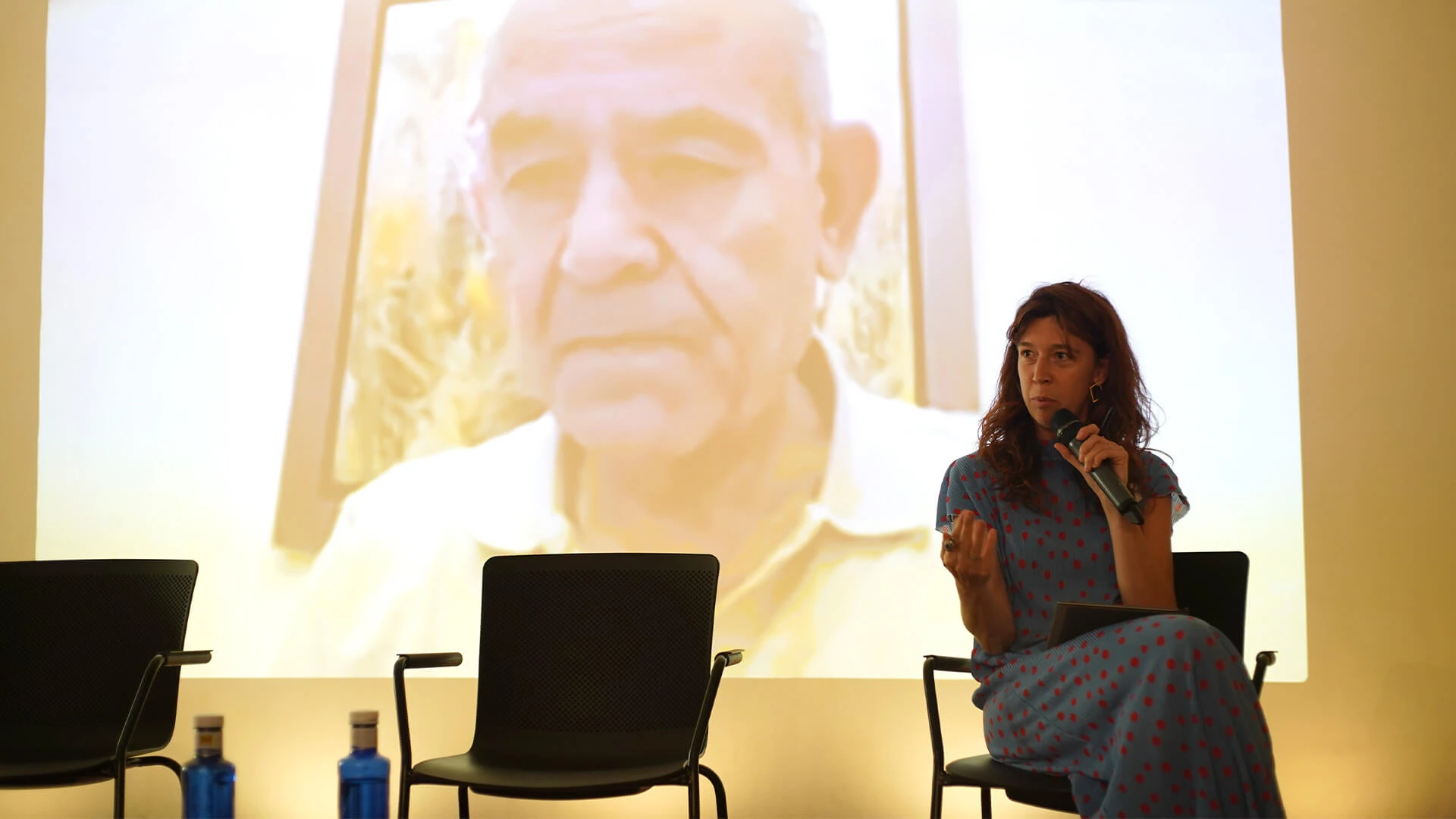
Raji Sourani, a human rights lawyer in the Gaza Strip, participated in the event “Voices against Impunity – Dialogues from Palestine to Spain for the World Day Against Torture”, which we celebrated on June 27th, in the Protocol Room of the Reina Sofía Museum. In a conversation with Gabriela López Neyra, Sourani, coordinator of the Sira Center, highlighted the situation of defencelessness that are suffered by people deprived of their liberty in Palestine. “We have thousands of people registered who are imprisoned without evidence, who have suffered all kinds of abuses. When we share this data with international organizations, they tell us that they hadn't even found similar things at Guantanamo,” the lawyer stated.
Regarding the gestures of support towards Palestine shown by various international organizations, Sourani took the opportunity to call on civil society to continue demonstrating and praised those countries and organizations that have condemned the genocide in the country. However, the lawyer also warned that Israel cares neither about the condemnation of international bodies nor the condemnation of the public opinion. According to Sourani, there is a politicization of international law that allows Israel to continue its offensive: “I wonder if this is happening because we are not white and European. In the case of Ukraine, there was international and legal condemnation, which is not happening in the Palestinian case.”.
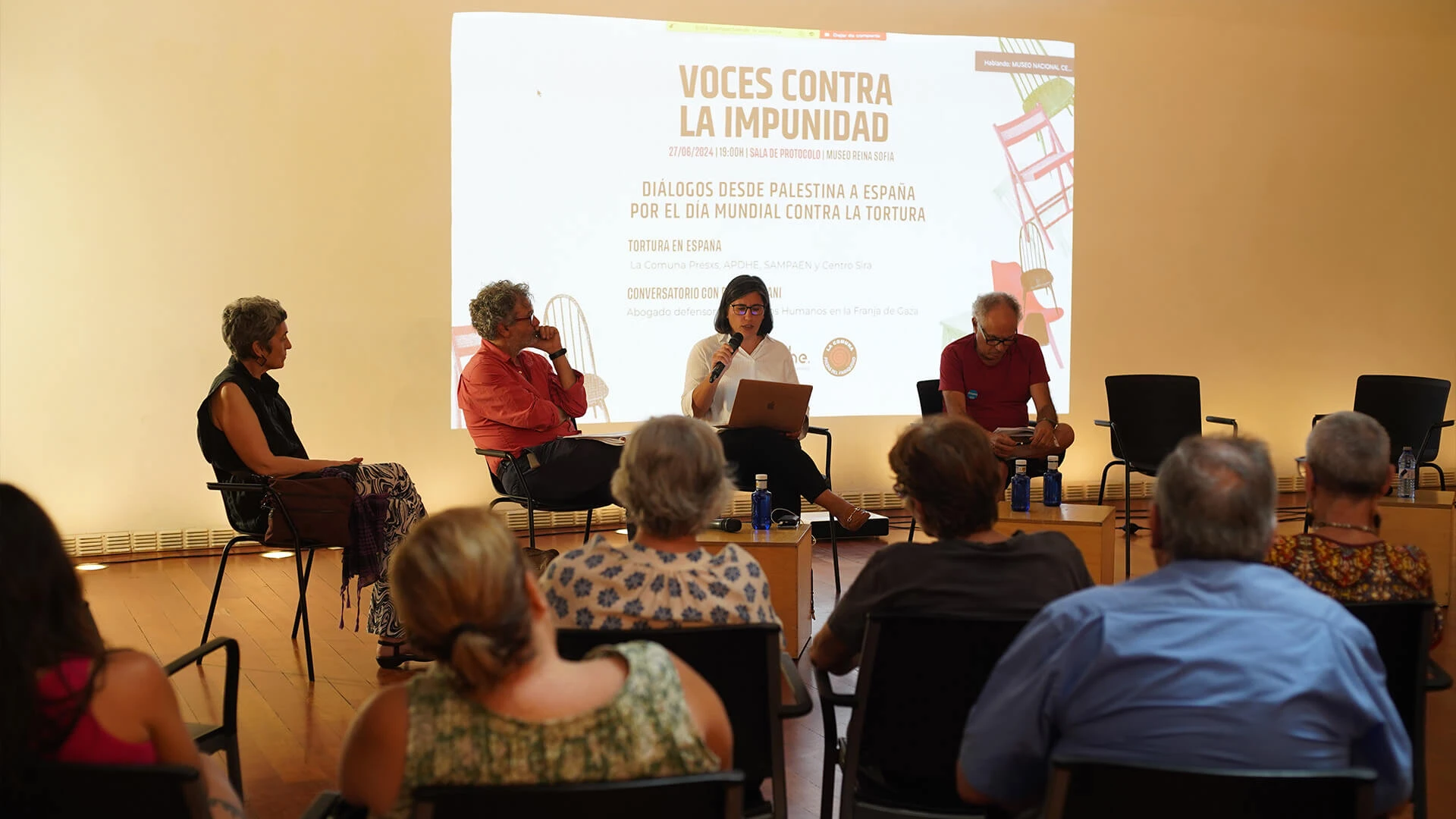
From left to right, Ana Gordaliza (SAMPAEN); Pau Pérez (Sira Center); Patricia Fernández (APDHE) and Carlos Serrano (La Comuna Presxs). Sira Center
Torture in Spain
In a first section dedicated to reflecting on the impacts of torture, Pau Pérez Salts moderated a panel shared by Carlos Serrano, of the Prisoners Commune, the lawyer Patricia Fernández Vicens, of APDHE y Ana Gordaliza, social educator in Penitentiary Institutions and part of SAMPAEN.The speakers focused their presentations on contemporary challenges in the fight against torture, based on their experience and area of work.
In a review of current events, Carlos Serrano used as an example the so-called “laws of concord”"promoted by the People's Party and Vox, to refer to the setbacks in the area of historical memory in the country, and with regard to the recognition of those imprisoned and tortured during the Franco regime as victims of torture. “We are not just talking about impunity. We are seeing how Francoism is being whitewashed. Plays and concerts are being censored, and I think we all remember this. They are paving the way because they support the social, cultural, and economic policies of the Franco regime,” he asserted.
Regarding the torture cases in Frontera, the lawyer Patricia Fernández He wanted to contextualize some of the situations of mistreatment and torture they face during the migratory transit Many of the people who travel from Africa to Spain, and whose journeys also extend into the reception process.“What we see is that when people report mistreatment and torture at the CIE (Foreigners' Detention Center), they are immediately returned. We are left without a complainant and without the possibility of filing a complaint,” the lawyer stated. “The Convention Against Torture obliges us to guarantee the right to rehabilitation for people who have suffered torture during migration transit, and we have no mechanism to do so. The State persists in returning people, condemning them to not being able to begin that process,» she added.
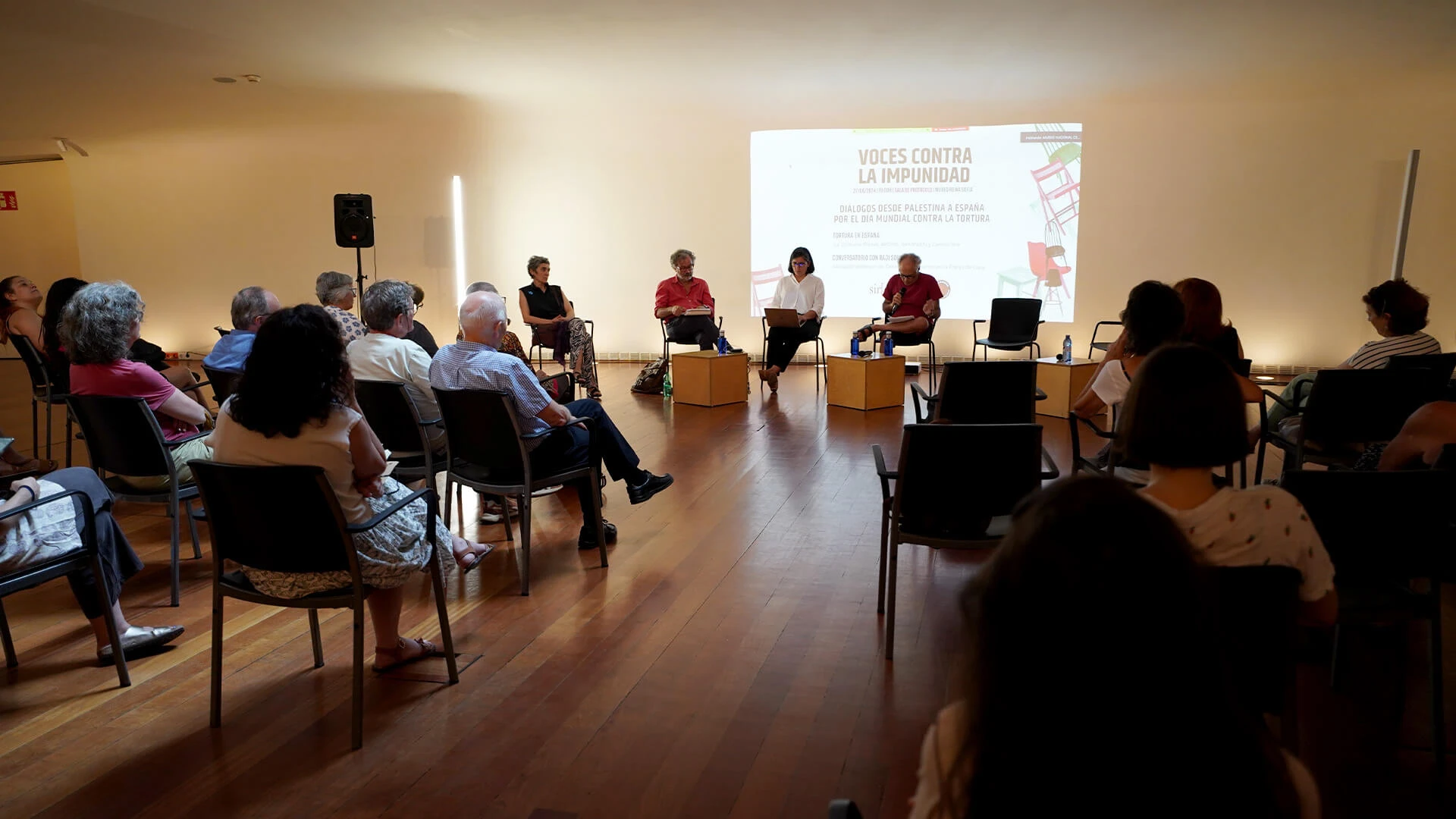
The speakers during the event in front of the audience. Sira Center.
Using the Shadow Report submitted to the United Nations last year as a reference, Patricia insisted on the need to ban the racial profiling, which subjects migrants residing in the State to daily violence. “Our colleagues in the Lavapiés neighborhood remind us that they don't cross borders. Borders are crossed for them. This situation is perpetuated throughout your life. Always being stopped by the police. Being the target of racism. I'm speaking to you because you are different,» the lawyer pointed out.
Finally, the social educator, Ana Gordaliza, reaffirmed the need for the penitentiary institutions have independent mechanisms that ensure the independence of the Medical reports.“Who watches the watchman? If someone goes to the healthcare workers who are part of the prison system to report injuries inflicted by an officer, can the independence of the medical report be guaranteed?” he asked.
During her speech, Gordaliza also referred to the recent demand by prison unions for more staff and security resources in response to what they consider "«an increase in attacks on workers in the centers«"For the educator, resorting to methods even more coercive Granting a new "agent of authority" status to officials who are not qualified for it will only worsen the conditions for prisoners, causing even more strain. "The deaths are on the side of the people who are deprived of their liberty, not on our side as civil servants," Ana asserted, referring to the mental health problems suffered by incarcerated individuals. Since the beginning of 2024, 6 people They have committed suicide in Catalan prisons.