
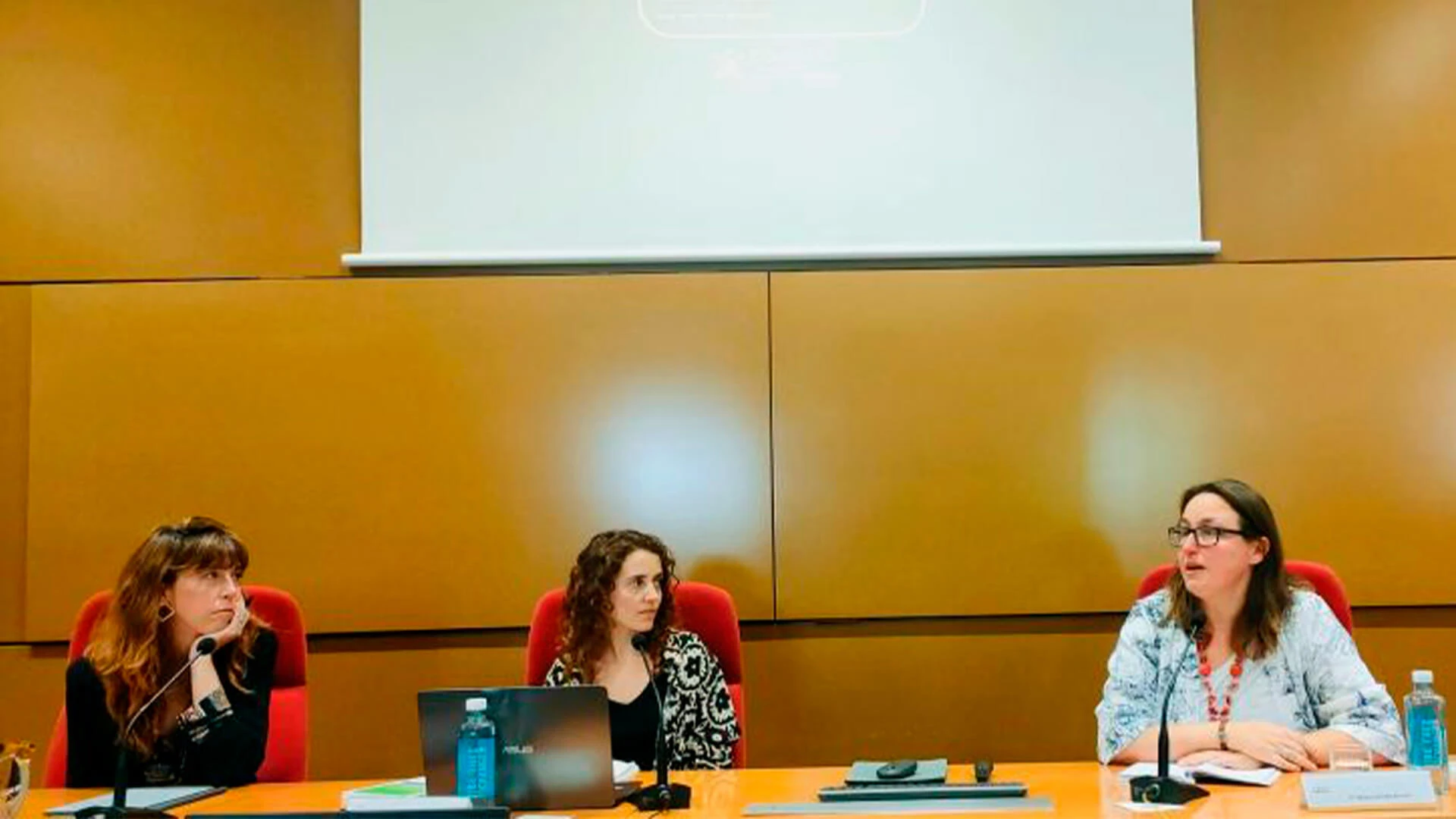
The coordinator of the Sira Center participates in a day dedicated to the care of unaccompanied and separated migrant children in need of international protection in Spain.
The event, organized by the Center for Innovation in Law (CID – ICADE) of the Pontifical University of Comillas, revolved around the presentation of the book “Legal study on unaccompanied and separated children in need of international protection in Spain”.
Migration infrastructure is built amidst confusion and constant change, and this particularly affects unaccompanied migrant children who, on their journey as asylum seekers, face obstacles disproportionate to their age. This explains Gabriela López Neyra, coordinator of the Sira Center, at a conference organized by the Comillas Pontifical University. Among her interventions, the psychologist stressed that it is essential for technical teams to develop strategies that serve to reduce and manage the uncertainty. “Supporting unaccompanied migrant children means assuming our responsibility as adults,” she says.
For López, as adults, efforts in providing care should be directed toward alleviating the burden placed on children and adolescents. This implies, among other actions, supporting them in decision-making without diminishing their agency; adapting tools that facilitate bureaucratic processes; and, above all, respecting the individuality and context of each young person, depending on their stage of life and development.
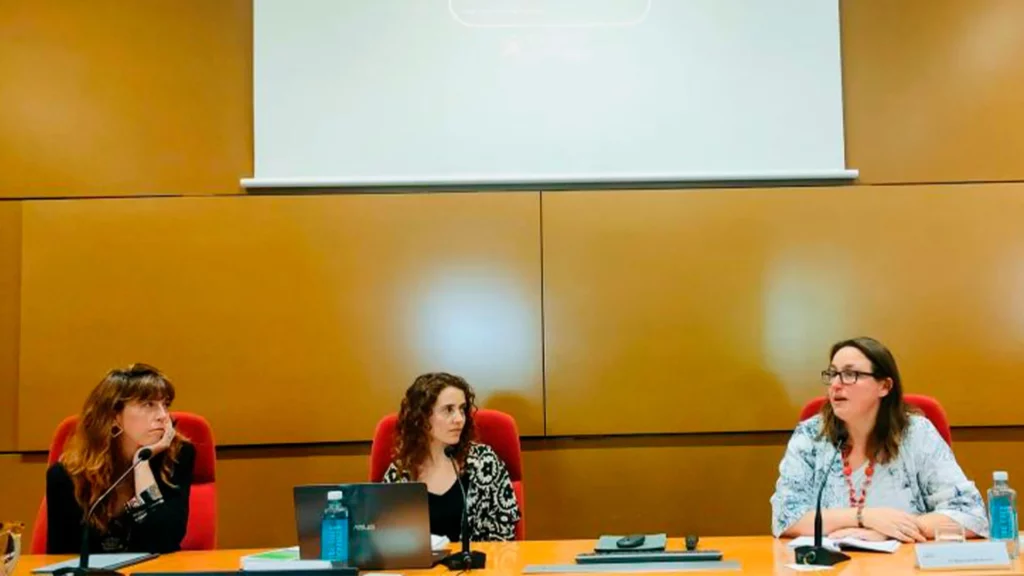
From left to right, Gabriela López (Sira Center); Paloma Torres (MEDUSA) and Nadia Garrido (Children's Villages).
Comprehensive security
Based on her experience supporting people on the move, the psychologist insists on the need for the reception system, and the professionals who work there, to prioritize providing a space that offers comprehensive security to unaccompanied migrant children. That is, a context that (1) avoids situations of discrimination and violence; that offers (2) temporary stability; and that guarantees emotional security, (3) that promotes bonds with clear and unconditional limits and, above all, not subject to behavior.
Finally, López points out that professionals must (4) consolidate spaces that foster reinforcement rather than punishment, working from a place of curiosity and non-judgmental acceptance. “A model that allows us to see the uniqueness of each person and that integrates dimensions relevant to migrant children, such as spirituality,” she notes. Gabriela emphasizes that culture can act as a protective mechanism here, which should be included in the support process. In this regard, she warns: “Such an early break with the cultural background from which each child comes could represent an irreversible rupture.”.
Mental health
Gabriela López warns that, when dealing with unaccompanied children, diagnoses related to behavioral disorders are common, but post-traumatic stress is rarely addressed. She points out that focusing on disruptive behaviors, rather than the underlying impact that may have triggered them, jeopardizes the emotional and psychological well-being of migrant children. “When we talk about migration, especially in cases of forced migration, we could be talking about a process of grief, traumatic shock, and adaptation,” she notes.
According to the psychologist at the Sira Center, working with young people can be divided into different phases aimed at improving their well-being. First, (1) integration and processing of what happened; then, (2) repairing any damage the experience may have caused; and, after that, (3) rebuilding the person's emotional and security support system. Finally, fostering the ability for children and young people to fully experience their childhood and adolescence, so they can develop into adults.

Poster for the event organized by the Center for Innovation in Law (CID – ICADE) of the Comillas Pontifical University.
Long-lasting solutions
The event, organized by the Center for Innovation in Law (CID – ICADE) of the Comillas Pontifical University, revolved around the presentation of the book “Legal study on unaccompanied and separated children in need of international protection in Spain”and served as a space for critical reflection, which featured professionals from different fields that are developed in this sector.
From this discussion, four major proposals for the future emerged:
- Consolidate multidisciplinary teams and mechanisms for holistic and intersectional identification.
- Respect the time and adaptation of children, so that they can understand the context in which they find themselves and can collaborate with the existing protection mechanisms.
- Develop and adapt protection systems to the specific needs of unaccompanied and separated migrant children.
- This requires increased investment and better training for the responsible and technical teams, coupled with political will. It also requires a commitment to providing these teams with more training and greater stability.