
After 6 years of fighting in the Spanish courts and 100 lawsuits filed, the first statement of a victim of torture under Franco's regime is made in a Spanish court.
Social organizations urge public authorities and political parties to adopt all necessary measures to ensure that this exceptional event ceases to be so and that there can be truth, justice, and reparation for the victims.
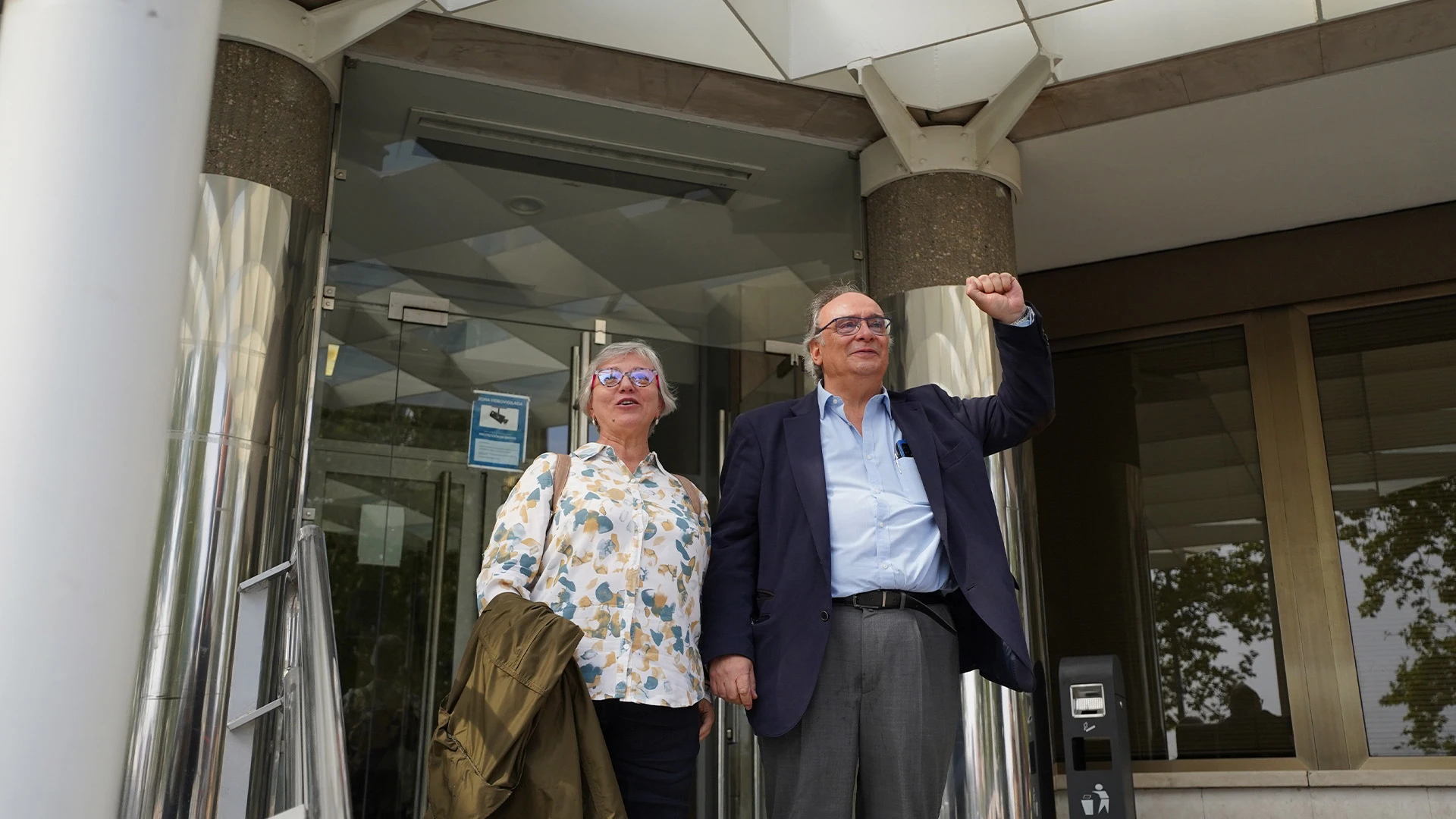
For the first time in history, A Spanish court has taken a statement from a victim of torture during the Franco dictatorship. Following the suspension of testimonies on July 14, today the Court of Instruction number 50 in Madrid took a statement from Julio Pacheco Yepes regarding the torture he suffered in August 1975 at the General Directorate of Security in Madrid, in which various members of the Political-Social Brigade, the political police during the dictatorship, participated. A statement was also taken from... Rosa García, in his capacity as a witness and in relation to the torture suffered by Julio Pacheco.
On May 12, 2023, the presiding judge of the Court of Instruction number 50 of Madrid, Ms. Ana María Iguácel Pérez, admitted the criminal complaint filed by Julio Pacheco and set July 14 as the date to take statements from the complainant and the witness. On that day, at the moment when the statements were to be taken, the substitute judge assigned to the Court, Mr. Fernando Muñoz Leal, decided suspend These statements were made without prior notice, offering as the only explanation that it was necessary re-examine the cause.
Today, the depositions proceeded normally for two hours, with the deponents providing details and information about the events that were the subject of the complaint filed with the Court. The legal team has assessed positively that “all the questions have been aimed at clarifying the facts and continuing the investigation.” The presiding judge of the 50th Investigating Court and the public prosecutor were present during the statement, as well as a prosecutor assigned to the Democratic Memory Chamber, who attended in support of the former., Mrs. Virginia García Aller.
«"The fact that we have spoken out today means that there can be more and that we can, finally, have justice here in the Spanish State.".
Julio Pacheco
Complainant
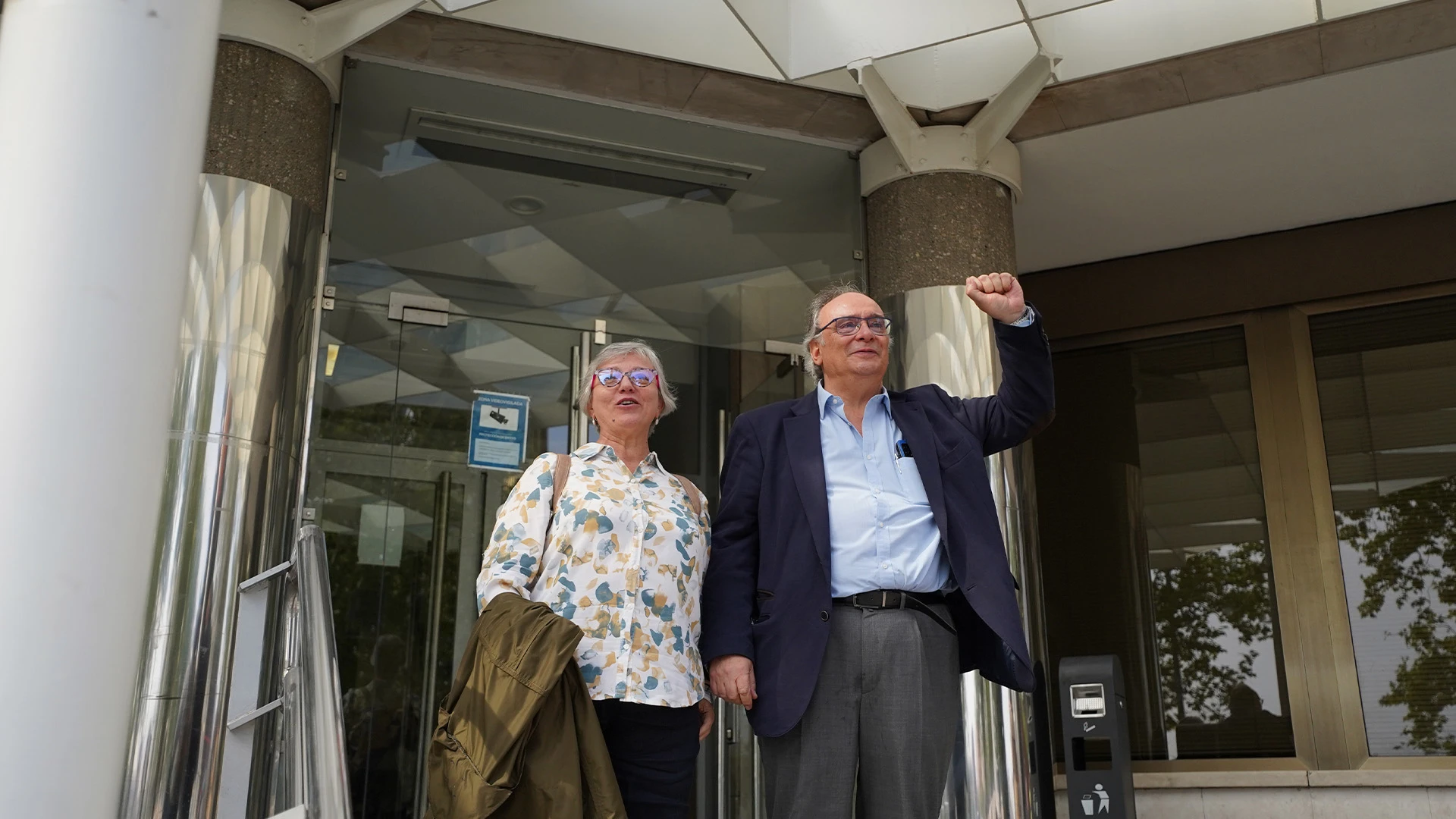
Julio Pacheco and Rosa García at the exit of the Courts. Sira Centre
The plaintiff, Julio Pacheco, is very pleased with his testimony, emphasizing the significance of a court finally taking a statement, within the framework of a criminal proceeding, from someone who suffered serious and punishable human rights violations during the Franco dictatorship. The plaintiff described the judge's treatment as "very kind and receptive, very good; I felt very comfortable and at ease." He also stated: "The process continues, and I believe it will continue. It's the beginning of breaking down this wall of silence and impunity that we have, and our testimony today means that there can be more, and that we can finally have justice here in Spain."“
From CEAQUA, Amnesty International, Iridia And Sira, we want to emphasize that this is the first time that a Spanish court takes a statement from a victim of torture during the Franco regime, in a context of crimes against humanity, this fact being as important as it is exceptional.
We must remember that more than one hundred lawsuits denouncing crimes against humanity, Francoist crimes, have been filed, some of them after the current Democratic Memory Law was enacted.
The Spanish State currently, even taking into account the progress and dynamics that the admission for processing of the complaint that Julio Pacheco once filed may generate in this area, maintains a framework of general impunity that continues to prevent the judicial investigation of Francoist crimes.
Therefore, we, from human rights organizations, want to challenge to the judiciary, the legislature, the executive branch, and the public prosecutor's office so that they adopt all the necessary and essential measures to make this exceptional event a regular occurrence, ultimately, to reverse once and for all the policies of impunity maintained to date.
Furthermore, we remind political parties that the legislative measures adopted to date do not fully and effectively guarantee the right to truth, justice, reparation, and guarantees of non-repetition for the victims of Francoist crimes. Appropriate, rigorous, and far more ambitious legislative measures are needed, always in accordance with the demands of the United Nations Human Rights Council, to reverse the policies of forgetting and impunity maintained since the Spanish Constitution was enacted almost 45 years ago.
We will continue to file lawsuits in Spanish courts and tribunals and demand the right to truth, justice, reparation and guarantees of non-repetition until we break the wall of impunity that prevents the investigation of Francoist crimes.