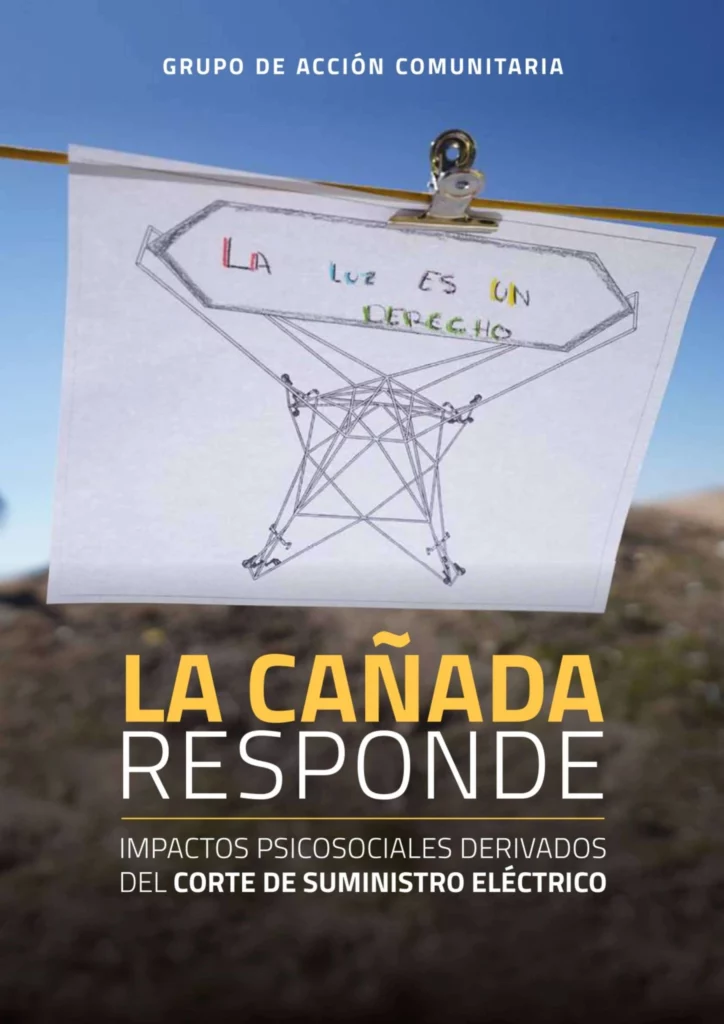

Following an expert report from the Sir[a] Center, the Community Action Group (GAC) published the report “La Cañada Responds”, which measures the psychological, physical and community impacts of the lack of electricity supply in the neighborhood
The residents report experiencing intense negative emotions on a regular basis, such as sadness, anger, or fear.
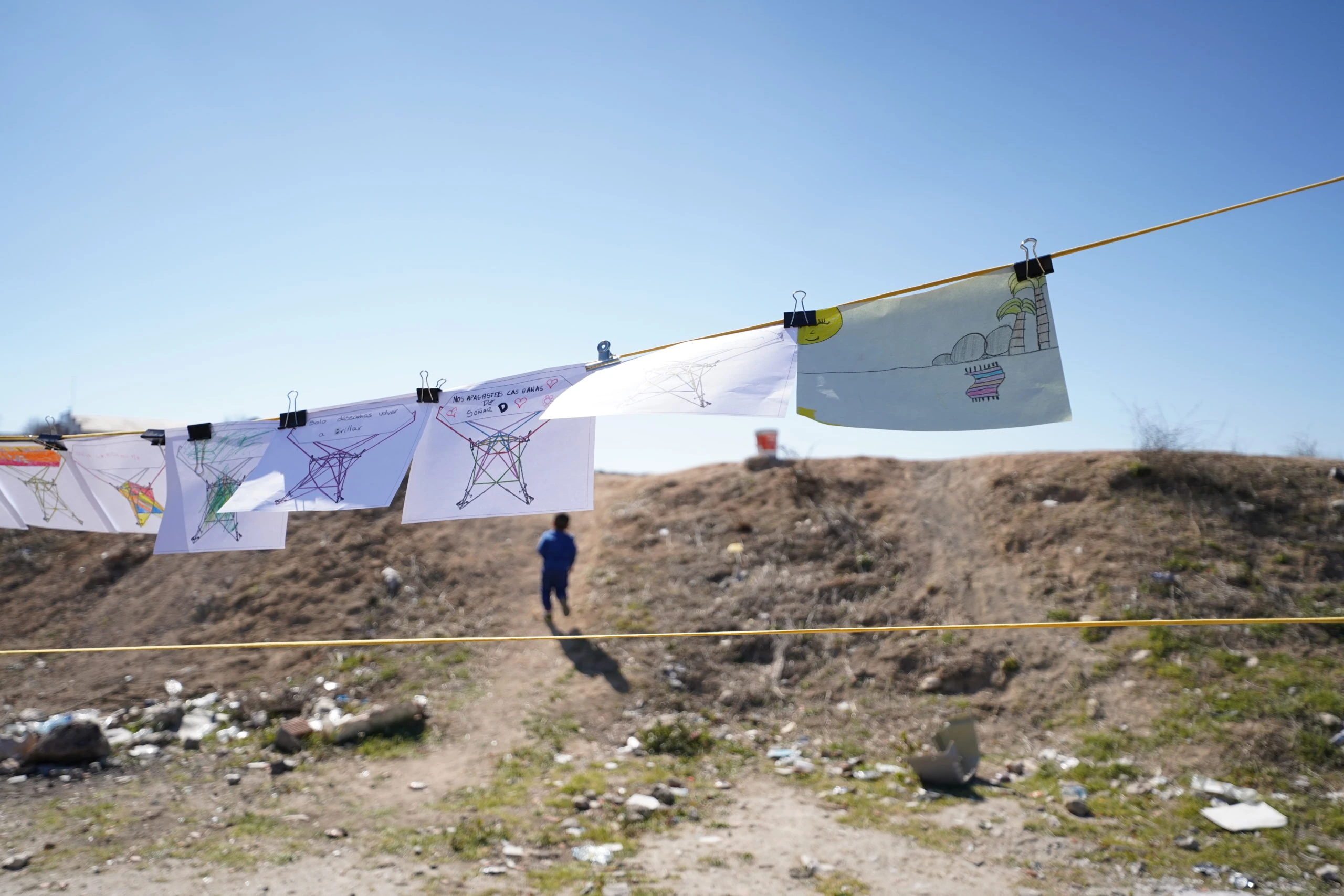
Since October 2020, thousands of families in Cañada Real have suffered from a lack of electricity, particularly affecting those living in sectors 5 and 6. The neighborhood has been forced to resort to all sorts of alternative means of survival, such as using firewood, candles, generators, or gas stoves. This struggle has meant that many families have had to cope with respiratory infections, burns, fires, falls, and other accidents, as well as experiencing feelings of fear and uncertainty.
To address this situation, the residents of Cañada Real, along with various individuals, neighborhood and cultural associations, and organizations belonging to the Civic Platform "Light Now for Cañada Real," have undertaken different legal, political, and advocacy strategies to demand the restoration of electricity. The latest was a collective complaint filed with the European Committee of Social Rights. This document, signed by the Trade Union Confederation of the Workers' Commissions (CCOO), the European Federation of National Organizations Working with the Homeless (FEANTSA), Defense for Children International (DCI), the ATD Fourth World International Movement, and European Magistrates for Democracy and Freedoms (MEDEL), ruled in favor of Cañada Real and urged Spain to take the necessary measures to guarantee access to electricity.
The administration, however, responded by downplaying the severity of the damage. It is at this point that the Sir[a] Center is asked to assess, through a report, the psychosocial impacts that this situation is having on people. From that expert document, the report “La Cañada Responds” emerged., which we developed together with the Community Action Group (GAC).
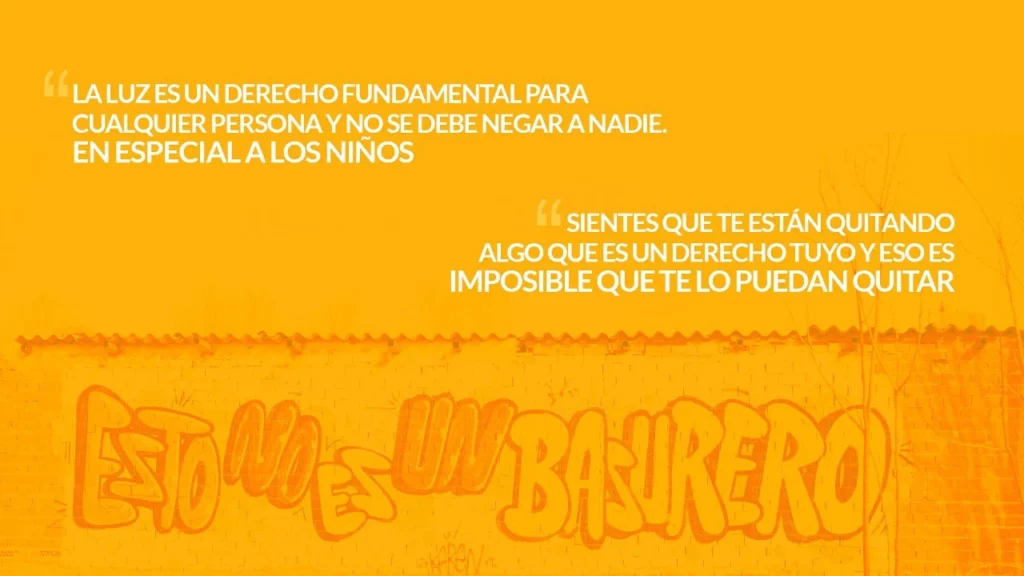
Testimonies from interviews conducted during the expert assessment, regarding the sense of indignity felt by the residents of Cañada Real
Physical and psychological impacts on the residents of Cañada Real
The publication highlights damage to basic survival functions, such as the deterioration of personal hygiene, of the living conditions in the home, or of the feeding, As a result, residents are unable to keep food refrigerated or cook using electricity. The neighborhood's economic capacity has been diminished by the expenses incurred to compensate for the lack of power. For 8 out of 10 residents interviewed, purchasing generators, batteries, firewood, or warm clothing makes it much harder to make ends meet. This situation has directly impacted the community's health, with reports of anxiety, sleep disturbances, and respiratory illnesses. Many people with chronic conditions also face the challenge of keeping medications refrigerated or carrying heavy loads. medical devices, which are dependent on light.
Following the power outage, nearly half of those interviewed reported needing mental health support: 90.21% felt sadness habitually; 82.7% feels rage due to feelings of injustice, powerlessness, and discrimination; and 68.2% experience fear because they don't know what will happen to their homes, their health, their future, and their families' well-being. The report highlights that 15.71% of respondents have ideas about suicide continuously, directly linked to the lack of electricity supply.
Of the total number of people interviewed, 9 out of 10 report feeling that the deprivation of electricity supply directly attacks their dignity as a person, While 5 out of 10 report having suffered discrimination from professionals in institutions, state security forces, or neighboring towns. “I have no words to describe how complicated everything is being from Cañada Real. Just having that address on your ID card leads to discrimination in everything. It doesn't matter where you go,” says one of the people interviewed.
Harm in childhood
Regarding the children and adolescents, The report highlights impacts primarily in areas such as physical health (increased colds, reduced sleep, and poorer nutrition), as well as education and play, due to the inability to use electronic devices, read, or play because of the lack of light. Nearly all adults notice the emergence of sadness, fear, nervousness, and fatigue in the children and adolescents living with them.
The impact on basic survival functions is greater in the women, especially in the socio-community, functional, and physical health spheres. There is a greater increase in the demand for mental health care.
The power outage has also impacted the unity of the residents of La Cañada. While some people appreciate that unity has increased because they have taken joint actions to defend themselves against the situation, at the same time, more than half believe that Neighborhood unity has decreased. This is due both to the strain this situation puts on people, and to the fact that many people are in a critical situation and, therefore, more irritable and demotivated.
Sectors 4, 5 and 6 of Cañada Real, a "Torturous Environment"«
The power outage adds to a series of attacks carried out by public institutions and bodies over the years. For more than two decades, the residents of Cañada Real have had to cope with a progressive increase in police harassment, forced demolitions and evictions, criminalization and stigmatization by the media, and limited access to education and healthcare, among other things. All of these mechanisms cause suffering to the population and aim to undermine their resistance.
For the Community Action Group, whose work has largely been focused on investigating the contemporary torture, The accumulation of actions and inactions that has been occurring for over 20 years in Cañada Real could constitute a "Torturous Environment," at least in sectors 4, 5, and 6. This term refers to a set of conditions, contextual elements, and practices that occur in a space and that nullify the victim's will and control over their life, harming them and jeopardizing their identity. This concept understands that torture is not due to a single technique, but rather depends on a cumulative effect or the combination of several methods that, taken separately, could not be considered torture, but which, together, create an environment that causes severe physical and psychological suffering, with a specific purpose.
Thus, the areas affected by the power outage in Cañada Real Galiana share a set of contextual elements, conditions, and practices carried out with institutional responsibility (through acquiescence or complicity) with a repressive or discriminatory objective. Given that this has caused and continues to cause severe physical and psychological suffering among the population, the report concludes that these areas may constitute a torturous environment.
La Cañada Responds: Psychosocial Impacts of the Power Outage
We analyzed the psychological, physical, and community impacts that the lack of light has on the Cañada Real neighborhood.