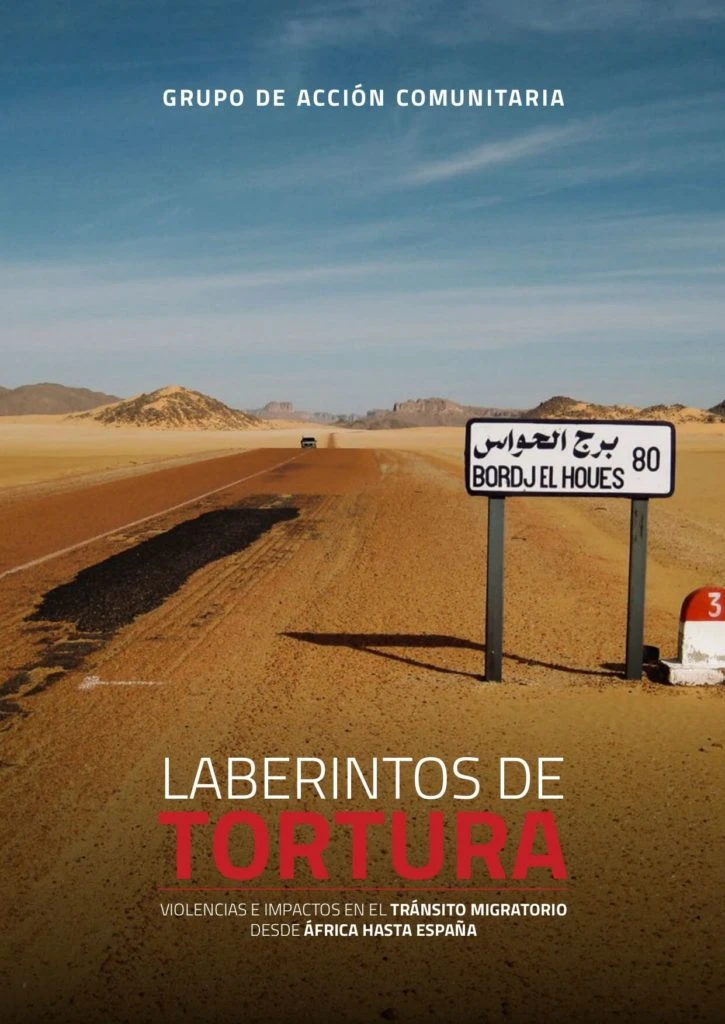
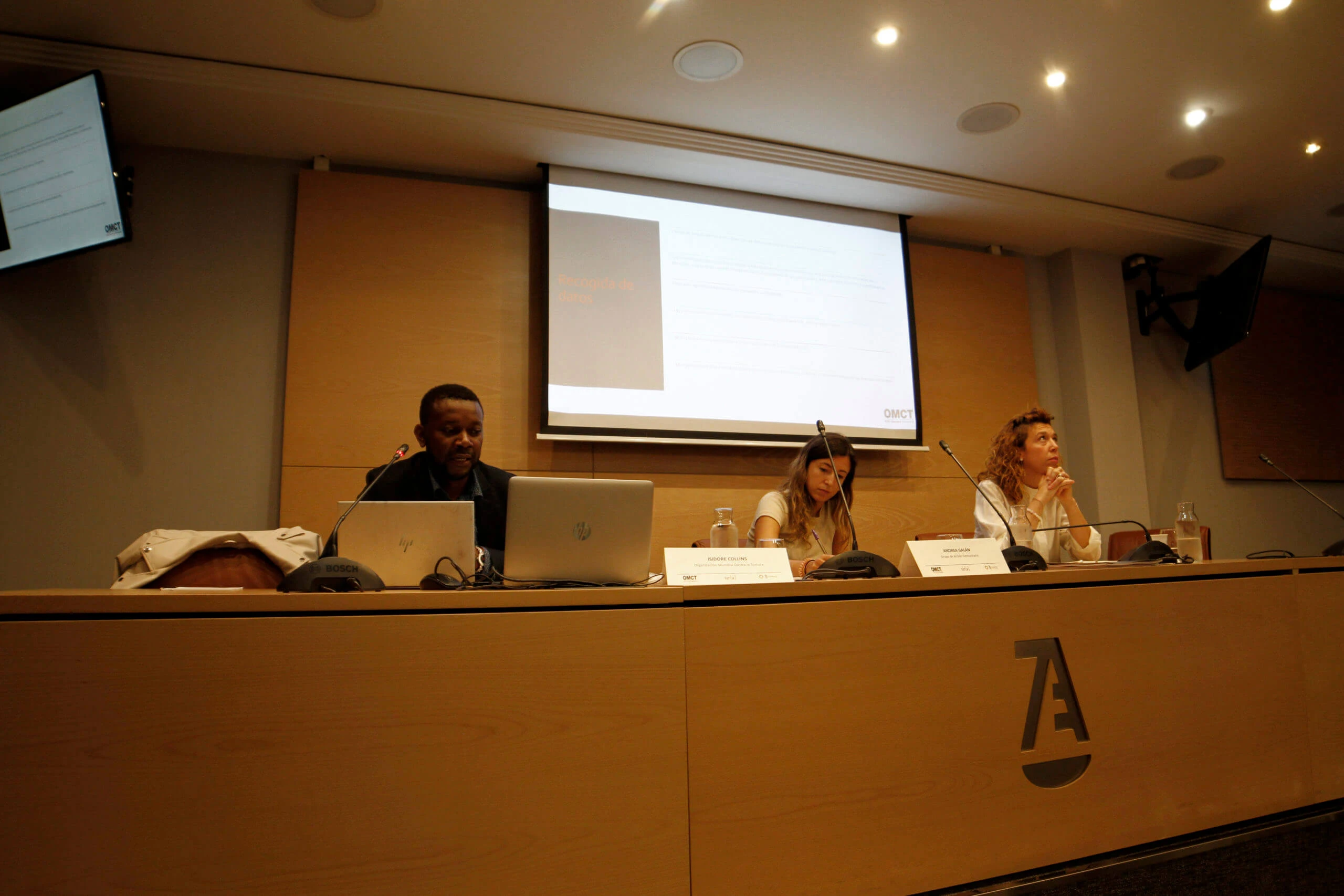
The Community Action Group (GAC) and the Sira Centre presented some of the conclusions of their new report “Labyrinths of Torture: Violence and Impacts in the Migratory Transit from Africa to Spain”.”
Accompanied by Isidore Collins, Human Rights Advisor to the World Organisation Against Torture (OMCT) for Africa, the entities insisted on the need not only to make visible and denounce this violence, but also to point out the responsibility of the States that perpetuate it.
The day “From Africa to Europe: a map of the violence and impacts of migratory transit”.”, organised by the GAC and the Centre for the Care of Victims of Torture and Ill-treatment, Sir[a], and in which the World Organisation Against Torture (OMCT) also participated, served to point out the urgent need to modify European migration policies. According to the organisations, Europe and African states, through measures to criminalise migration, and the shielding and externalisation of borders in particular, are exposing people seeking to reach Europe or other countries on the continent to extreme conditions and human rights violations, with the aim not only of intimidating them, but also of impeding their journey.
Isidore Collins Ngueuleu, OMCT's Senior Human Rights Advisor for Africa, insisted on the need to take into account that some of the world's deadliest migration routes are in Africa. Based on data drawn from OMCT's report “The Torture Roads, The Cycle of Abuse against People on the Move in Africa”.”, Isidore pointed to how the tightening of borders forces people on the move to travel through increasingly dangerous clandestine routes, risking extortion, discrimination, kidnapping, torture, sexual and gender-based violence. All violations that are not only committed by criminal groups, but are often perpetrated by, or with the acquiescence of, state agents.
Isidore also pointed out that one of the most dangerous and most torture-prone places are border and migration checkpoints, such as those between Libya and Algeria; Chad and Niger; Sudan and Chad; Sudan and Egypt; or Niger and Algeria. According to their account, people are detained in these places for lack of documentation - even across borders where they would not legally need a travel permit - and are often subjected to torture and ill-treatment by state agents. “Without papers you are exposed to all forms of mistreatment”, he points out. In this sense, for OMCT's adviser, there is a voluntary policy of punishment by African states towards people on the move, as perpetrated by agents directly under their management and acting under their orders.
Impacts and footprints of migratory transit
In a second stage, Andrea Galán Santamarina, psychologist and head of the research area of the Community Action Group, presented the results of the study. “Labyrinths of Torture”, The report analyses the violence and violations suffered by those who make the journey between Africa and Spain, based on the testimonies of more than 40 people. The report details the violence suffered by the people interviewed and highlights the fact that practically the whole of those assessed were subjected to some form of abuse during their migration journey. extreme violence. In this sense, a 67,4% was a victim of torture and ill-treatment; one 86% forced to live in situations of extreme poverty; a 74,4% witnessed the death of another person; and one 93% perceived at some point the risk of imminent death.
The report highlights above all the impact on mental health that the migration transit had on the total number of interviewees. In more than half of the cases, the transit generated specific impacts on mental health. that did not exist before the trip, The other cases, however, the road meant that they had to travel a long way to reach their destination. worsening of their previous impacts. The study notes that a 81% has a perception of the world as a hostile and dangerous environment, as a result of his or her traumatic experience; a 86% now has difficulty trusting other people or establishing relationships; an 93% feels feelings of humiliation and indignity; and almost a 84% presents post-traumatic stressThe following are some of the most common symptoms: nightmares, a constant feeling of alertness, or intrusive thoughts related to the extreme violence they have experienced, among others.
As Andrea underlines, there is a feeling among the experts that there is much anger, despair, injustice and even guilt for having undertaken the journey, or for not having been able to help a companion survive at some point along the way. For the psychologist, it is essential to take into account all this violence and specific experiences when attending to and properly accompanying people arriving in Spain: “If we do not generate specific support for all these needs that people bring with them, it will be impossible for these impacts to recover. And not only that, in many cases they will worsen or become chronic», she points out.
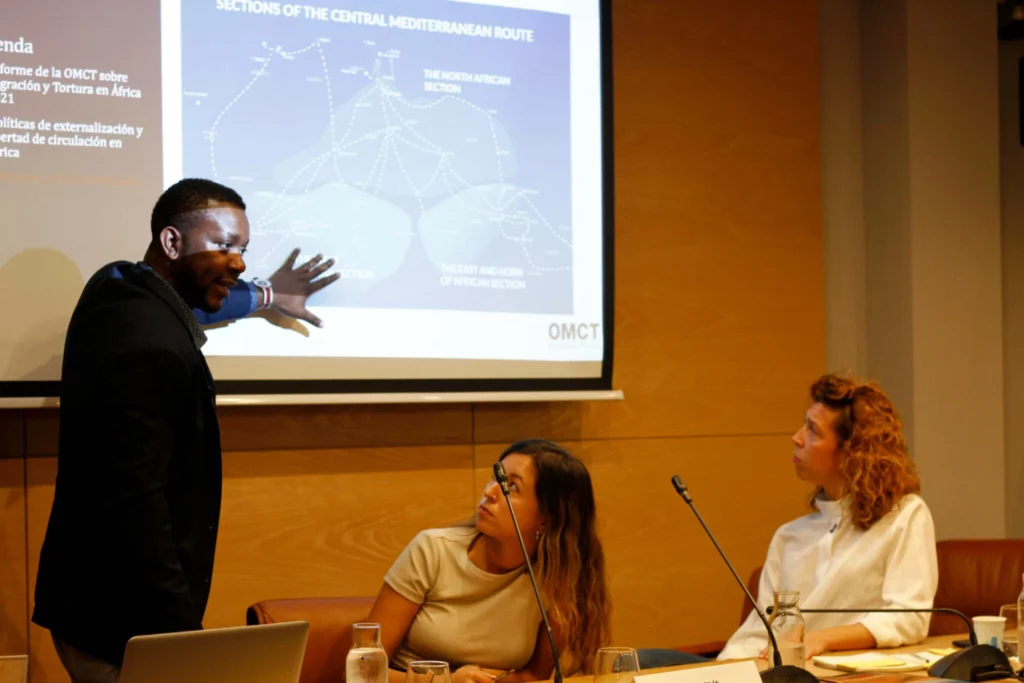
Andrea stresses that people who have experienced violence in transit have suffered from violations of all kinds and in all kinds of contexts. That is, they have not only suffered violence during the journey, but also before the journey; and they have not only been abused by particular groups - such as trafficking networks - but have also suffered violations by state agents. All of this violence pushes people to lose confidence in any human being, or to find themselves incapable of fulfilling any life project. In this sense, the psychologist insists on the essential need for people to be able to find in their host country a sense of security, stability, dignity and control over their lives, and stresses that Spain, as a signatory to the Convention against Torture and Other Cruel, Inhuman or Degrading Punishment, has the obligation to ensure this accompaniment.
In line with Isidore's point, the CAG report argues that African states and the European Union are responsible of violence against people on the move. Thus, while it is exercised with the purpose of impeding and intimidating those who travel, it only exposes people to brutal violations of Human Rights.
Labyrinths of Torture: Violence and Impacts in the Migratory Transit from Africa to Spain
Based on the testimony of more than 40 people who made the journey from Africa to Spain, the Sira Centre and the Community Action Group made visible the systematic violence suffered by those who make the journey. We analyse the impacts and traces left by the journey on their mental and physical health.