
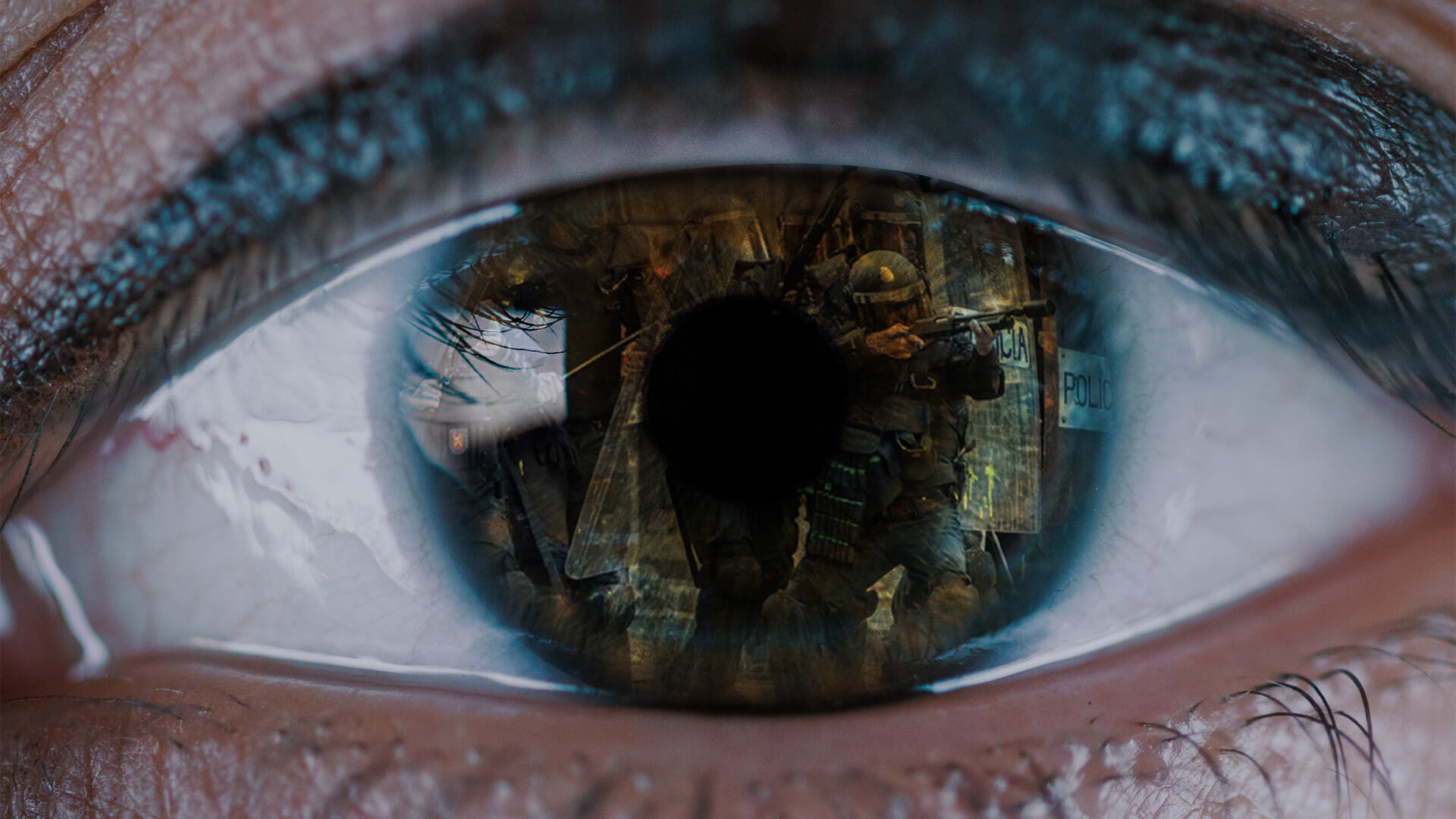
Balas de Goma not only portrays the long and exhausting legal battle that Carles and Ester have faced. It is also a reflection of the power of the collective, of how necessary care and solidarity are to resist impunity.
SEBAS RODRÍGUEZ | Sira Centre Communication Manager
The image is still fresh in my mind: the enormous hall, the silence at times, the applause, the standing comrades, The nodding heads, the complicit smiles. That day it was my turn to be in front, photographing the whole scene. That's why I remember it so well.
Fue en junio del año pasado. Se cumplían nueve años desde la entrada en vigor de la Ley Mordaza, y diversos colectivos y personas afectadas por su aplicación se reunieron en el Congreso de los Diputados para exigir su derogación. En las fotos puede verse a representantes de Yayoflautas, Stop Balas de Goma, Desarma Madrid, Al Yudur, la PAH de Carabanchel, SOS Racismo Madrid, No a la Tala, Afemtras y Ala Cannabis. Todas compartieron, en una mesa dedicada a los impactos de la ley, sus vivencias, dolores y aprendizajes.
Among all these voices, one in particular struck a chord: that of Carles Guillot. In 2001, in Barcelona, during a protest against the illegal eviction of the Kasa de la Muntanya, Carles was hit by a rubber bullet fired by a National Police officer. The projectile caused him to lose an eye.
Since then, Carles and his colleagues from Stop Rubber Bales have spent more than two decades both accompanying other mutilated people and calling for a ban on these weapons, as imprecise as they are lethal. “The sadness, the anger, the feeling of guilt, the insecurity, the fear of going out in the street, or the fact of looking in the mirror and seeing that the image that comes back is not you”, said Carles during his speech at the Congress, referring to the after-effects of the shooting. From his testimony, the idea for the new episode of our podcast was born. Brechas: Balas de Goma.
In reconstructing its history, we find in the newspaper archives the trace of more than twenty years of struggle: interviews, reports, denunciations, actions, and a hand extended to each new victim. Since 2000, at least eleven people have lost the sight of an eye in Spain due to the impact of this type of projectile. In 2012, Iñigo Cabacas lost his life after being shot by an Ertzaintza police officer.
Este proyecto nos permitió también conocer al trabajo de organizaciones como Stop Bales de Goma y Ojo con tu Ojo, y acercarnos a las heridas, los recorridos y la fuerza de otras personas supervivientes: Olga, Aingeru, Roger, Óscar, Nicola, Juan, Daniel, y también Ester Quintana, cuya historia ocupa un lugar central en el episodio. Su empuje fue clave para que se prohibiera el uso de balas de goma por parte de los Mossos d’Esquadra en Catalunya.
In sharing their experiences, many of them acknowledge that the support of their peers, their close ties, their families and civil society was - and continues to be - the impetus for go ahead. In particular, the bond between those who share a similar wound. “I thought I had to do like them and take the lawsuit forward,” says Ester, recalling her first encounter with Stop Bales de Goma.
This episode not only portrays the long and exhausting judicial career that Carles and Ester have been through, but also the physical impacts and psychological problems experienced by those who have suffered this type of violence. It is also a reflection of the power of the collective, of how powerful and necessary care and solidarity are in order to resist in the face of the impunity. “I would also take the solidarity of the people, and our solidarity with each other. I keep the dignity, with our dignity of not giving up, of continuing to work, of continuing to fight”, concludes Carles in the episode. Balas de Goma wants to be a reflection of that dignity: the dignity of those who organise themselves, embrace each other and do not give up, even when the state turns its back on them.