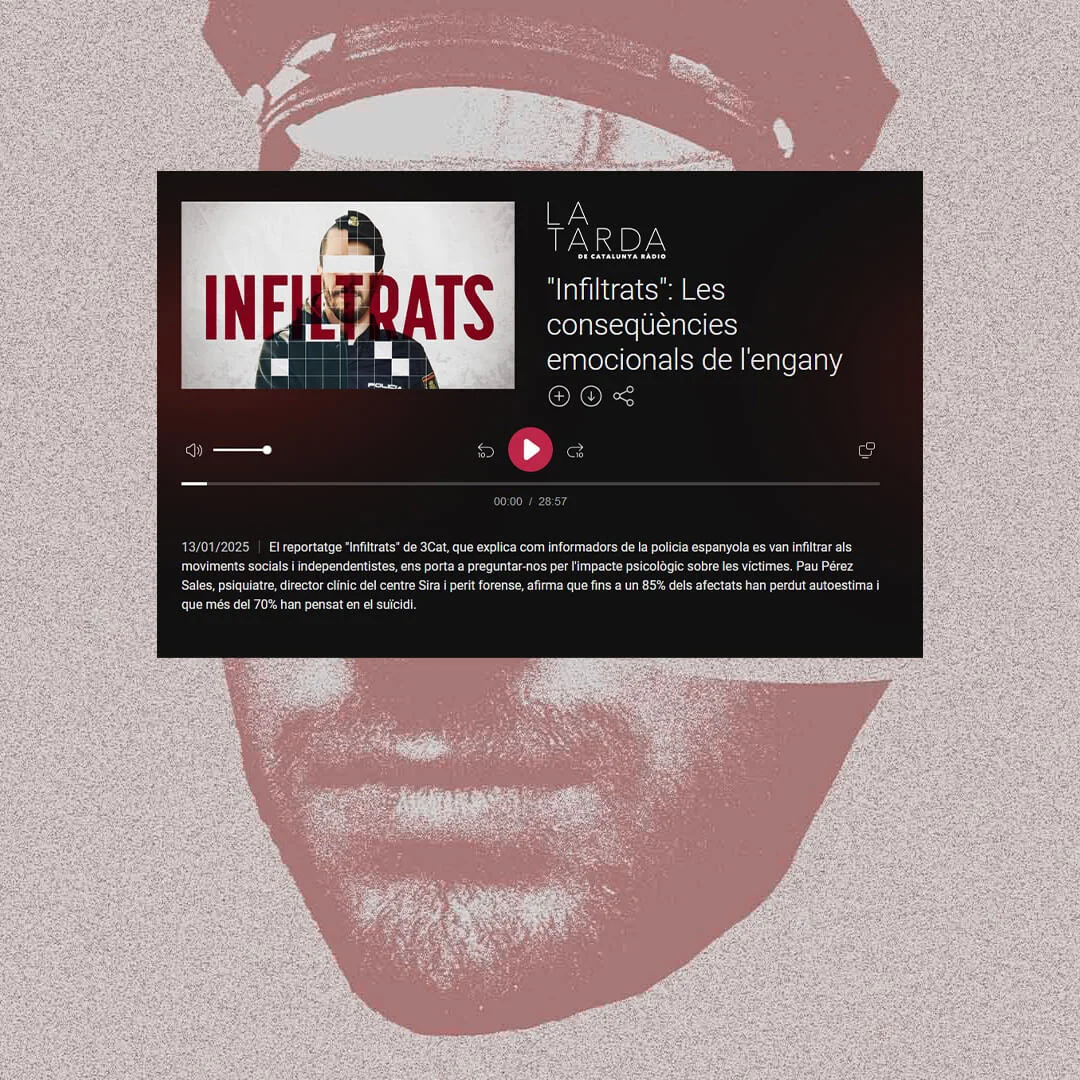


Gaps Podcast – May they not be
They knew him as Dani. They knew him as Sergio. But neither Dani nor Sergio ever existed.
The protagonists of this episode shared activism, friendship, and even a house with someone who turned out to be an undercover police officer.
And they weren't the only ones. In various social movements across the state, many believed they were building real bonds – emotional, political, or even romantic relationships – with people who weren't who they claimed to be.
These are the consequences of police infiltration. And also, ways to resist them.
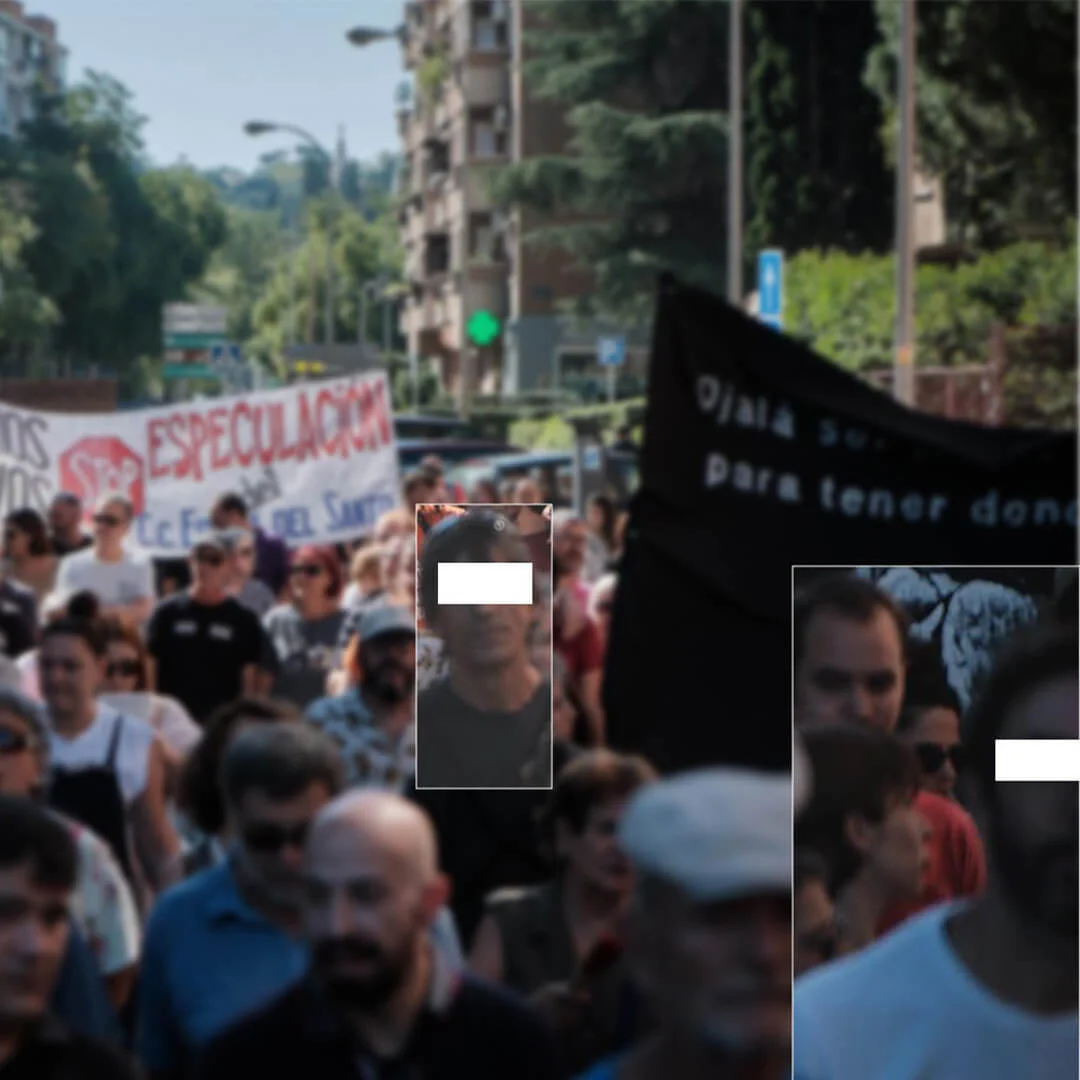
Those affected by police infiltration should be recognized as victims of torture
There is serious suffering.
There is a clear intention.
There is one objective: to obtain information, to punish, to humiliate, or to discriminate.
And all of this is carried out by a state official.
Under these criteria, the facts fit the definition of torture according to international standards.
3 key points of the episode
THEY SAY THEY ARE
Most of the undercover agents shared a similar profile: calm, conciliatory, affable, and non-confrontational individuals. This pattern was too uniform to be accidental. In some cases, the infiltration went further, resulting in a genuine transformation of identity: T-shirts with anti-fascist messages, piercings, mohawks, visible tattoos… The agents took advantage of the open and horizontal nature of social movements to integrate themselves, gain trust, observe from within, and extract information.
IMPACTS OF INFILTRATIONS
Among the most serious psychological impacts are depressive episodes, panic attacks, and insomnia. Of all the people evaluated, 70% reported having had suicidal thoughts at some point. In 90% cases, these thoughts were linked to shame, the humiliations suffered, or a clear sense of the "irreversibility of the harm." All stated that they would never have had sexual relations with the undercover agents had they known their true identities.
COLLECTIVE ORGANIZATION
Those affected know that infiltration of social movements is nothing new. That's why, in their efforts to denounce the situation, they reconnected with people who had also gone through similar experiences in the past. People from Madrid, Valencia, Asturias, Seville, Barcelona, Girona, and even groups in the United Kingdom, have worked together so that others in the future can learn how to deal with a situation like this.