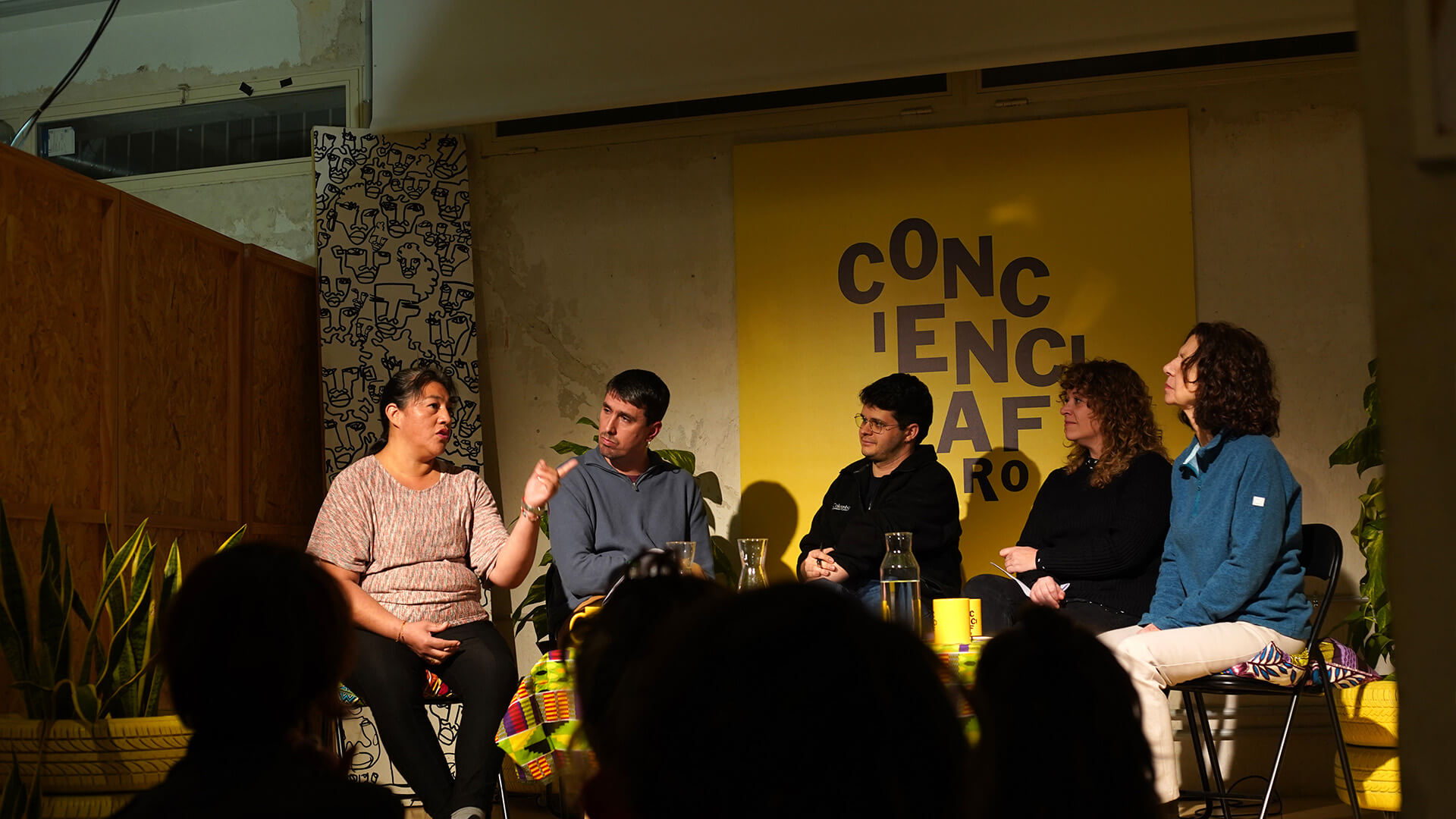
Sabina Carau, spokesperson of the Union of tenants, participated in the round table “Psycho-legal strategies for the defence of housing”, in the framework of the event “Seamos Cien”, organised by the Sira Centre.
The event also featured the psychologist from the San Juan de Dios homeless shelter, Pablo Fernández Cordón, Victoria Zunzunegui, an ageing researcher and member of the Citizens' Commission for the truth in the residences of Madrid, and Gladys Zambrana, a neighbour and member of the Civic Platform Light for Cañada Real.
In a space dedicated to the defence of the right to housing, Sabina Carau, spokesperson for the tenants“ union, as did her colleagues at the table, presented some of the physical and psychological impacts related to the housing crisis, real estate speculation, and the impoverishment of the working classes. Carau pointed out how in the assemblies it is increasingly common to find people affected by serious health problems, from insomnia and anxiety to paralysing fear. ”When you see a family being thrown out of their home, when you feel the violence of the riot police filling the building to remove a neighbour with underage children, it's something you live in your body and you can't dissociate yourself from it. It is a reality that goes through you 24 hours a day", he said.
The spokesperson also denounced the growing gap between rentiers who accumulate property and working families. “Housing is a cross-cutting issue. Without a roof over your head you can't find a job, you can't study, you can't do anything,” she said. According to data Carau pointed out that these conditions particularly affect the younger population, as well as migrants, racialised people and those without a breadwinner.
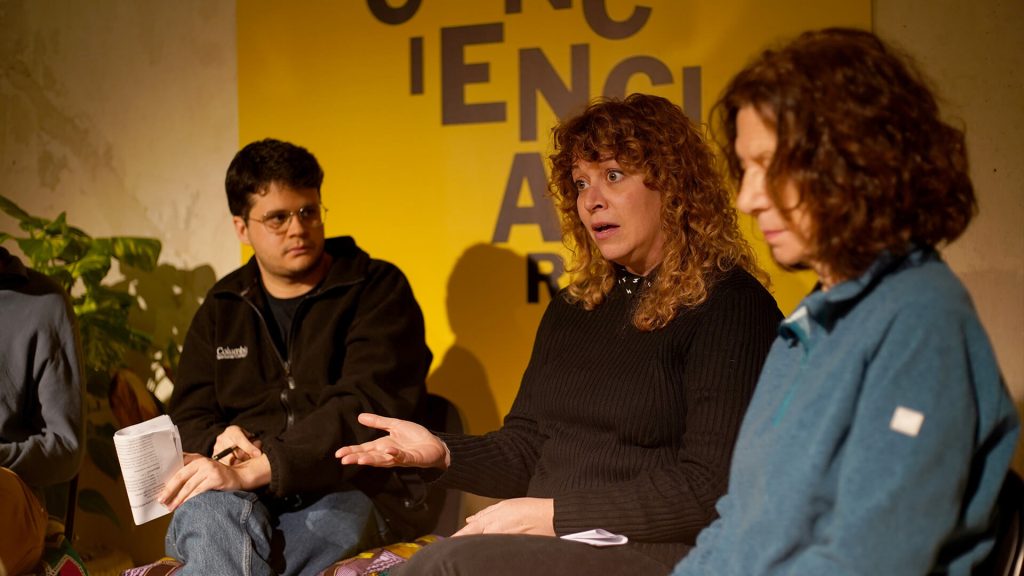
Against this backdrop, Carau pointed to the importance of collective struggle as a tool for resistance and transformation. “More than a pill, what helps is the neighbour who sits next to you. Sharing our stories makes us realise that we are not alone,” she insisted.
The union's initiatives include the neighbourhood brigades. As the spokesperson explained, these are different groups that go around the streets, small shops, clinics and buildings, asking for the feelings of the neighbours. “Often you are not the only one in your building who is threatened with eviction and you can act collectively, for example by going on a collective rent strike”, explained Carau.
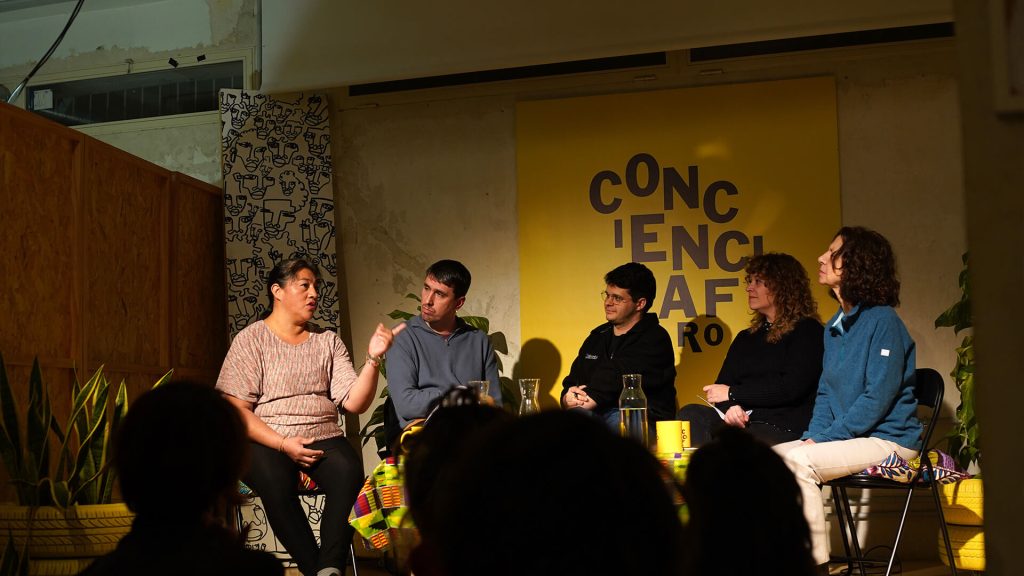
From left to right: Gladys Zambrana, Pablo Fernández Cordón, Lluís Elias, Sabina Carau and Victoria Zunzunegui.
5th winter without electricity in Cañada Real
Gladys Zambrana, a neighbour and member of the Plataforma Cívica Luz Ya Para Cañada Real, denounced the serious situation in the neighbourhood, which has been without access to electricity for five winters now, especially in Sector 6. impacts The families suffer most of all. Most of us who live there are families with children, workers, labourers,” he said.
Zambrana, referring to the different national and international resolutions that have given them the right and ordered the restitution of the electricity supply in the neighbourhood, stressed that the situation in Cañada Real is a reflection of the systematic abandonment by the institutions of the most impoverished communities. “Human rights, for us, have gone for a walk. They don't appear. It seems that they are only for rich people”, he declared. Recently, the Council of Europe resolved against Spain for leaving the Cañada Real de Madrid without electricity and declared that their human rights had been violated. In this process, the Sira Centre provided an expert report on collective damages, which was submitted to the case as qualified evidence. As a result of this work, the report “La Cañada Responde: Impactos psicosociales derivados del corte de suministro eléctrico”, which analyses the psychological, physical and community impacts that the lack of electricity has on the Cañada Real neighbourhood.
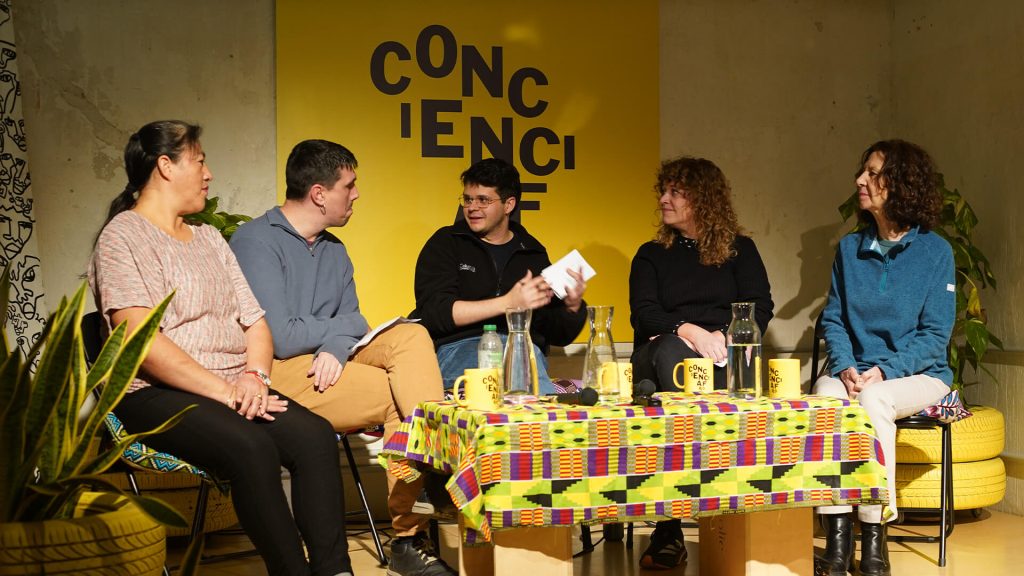
From left to right: Gladys Zambrana, Pablo Fernández Cordón, Lluís Elias, Sabina Carau and Victoria Zunzunegui.
Precariousness in shelters and residences
Pablo Fernández Cordón, psychologist at the San Juan de Dios homeless shelter, highlighted the lack of resources to attend to homeless people. “We have a waiting list of more than a year and a half, when you need a roof over your head now,” he said. With regard to the people who come to the centre, he stressed that these are highly stigmatised profiles, in whose lives they have suffered violence in the family, in detention centres, by the police or even by their own neighbours.
For her part, Victoria Zunzunegui, epidemiologist and researcher, addressed the lack of an adequate care network in Spain, despite the fact that it is a country with an increasingly long-lived population. “The commercialisation of care has led to many people dying without the care they need,” she said. Zunzunegui, an investigator for the Citizens' Commission for the truth in residential homes in Madrid, pointed out that during the pandemic crisis, more than 7,291 people died in nursing homes without hospital care. He pointed out that this highlights the precariousness of the care system, the opacity of a system that denies its responsibility, and the lack of a structure that guarantees the dignity and safety of care for the elderly.
Let's be 100
This round table took place as part of the membership campaign “Seamos Cien” (Let's be a hundred), organised by the Sira Centre. The Centre for the Care of Victims of Abuse and Torture is looking for its first 100 members to strengthen its work, ensure its sustainability and continue to guarantee comprehensive care for survivors of violence who come to the organisation.
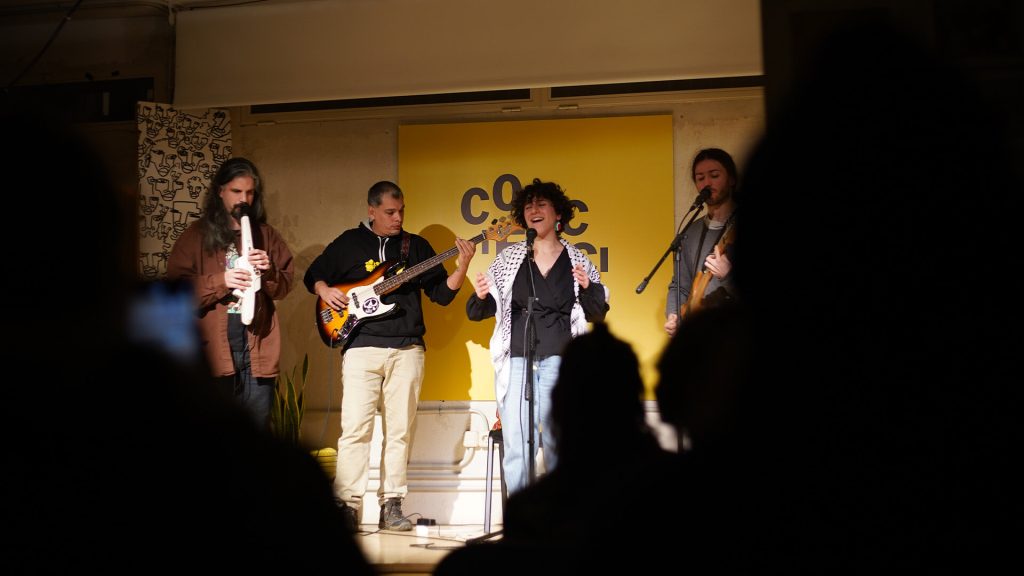
The event, which was hosted by Afro Space, also featured the group Al Ázar, who gave a concert for the audience.