
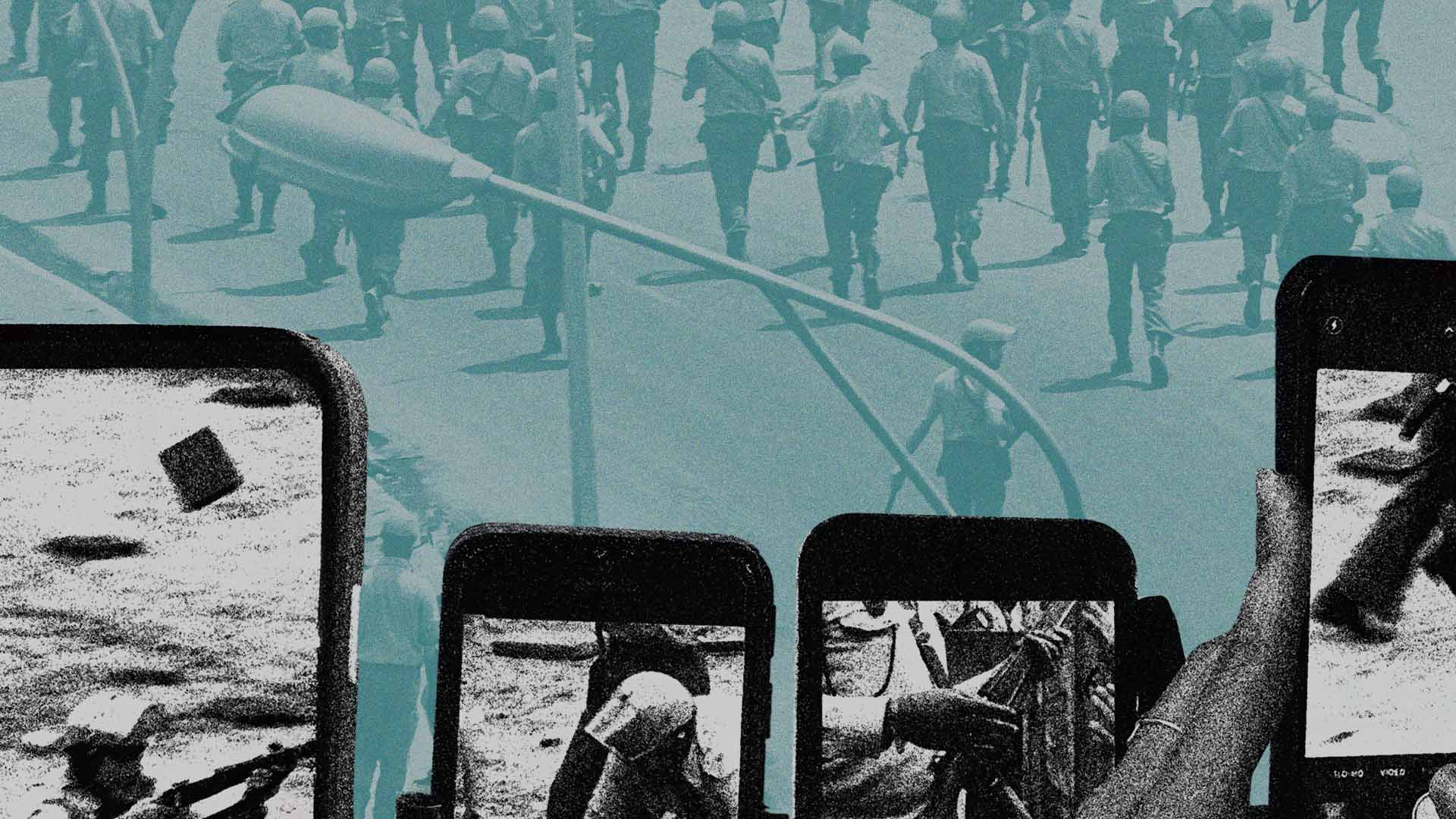
Communication can play a key role, as long as it is understood from a community and transformative perspective.
Over the years, at Sira we have had the opportunity to accompany a number of affected people by communicative processes. Thanks to their contributions and the joint work with professionals from the world of communication, we produced the manual «.«Towards psychosocial communication: A guide to integrating a psychosocial perspective in communication processes related to rights violations«. This handbook is designed to raise awareness and visibility of the impact of communication processes and to offer practical tools so that all those involved can participate in a safe, dignified, responsible and restorative process.
At Sira, we have stopped to look at how we communicate as an entity. And, in the process, we also explored how the media, NGOs, academic spaces and social movements working in contexts of rights violations do it. From here, we seek to develop and offer strategies that help to communicating from a psychosocial perspective. In other words, putting the well-being of all the people involved in each stage of the process at the centre.
”Rights violations are about removing people's ability to make decisions about their own lives.
This handbook is designed for those working with people affected by violence and psychosocial trauma. When we speak of psychosocial trauma, we refer to a wound that, although experienced individually, has deep social roots. Its origin and persistence are linked to the historical, community and structural conditions in which it occurs. That is why, its reparation cannot be limited to therapeutic accompaniment alone, It requires a broader and more comprehensive approach that involves society as a whole. At Sira, we believe that communication can play a key role in contributing to this process, as long as it is understood from a holistic perspective. a community and transformative approach.
Rights violations seek to eliminate people's ability to make decisions about their own lives. If we understand communication as a hierarchical, extractivist and unidirectional process, we run the risk of reinforcing that same logic.
When as communicators we carry out interviews, reports, publications in networks or any other content without considering the perspective of the protagonist, without listening to the message they want to convey or prioritising our own interests, we may be denying them the possibility of redress and even generating new negative impacts on their experience. People are masters of their own stories and, as such, taking control over the narrative can be restorative and dignifying.
We hope that this guide will provide us all with more tools with which to communicate and work in a more responsible, empathetic, caring, safe and dignified way.
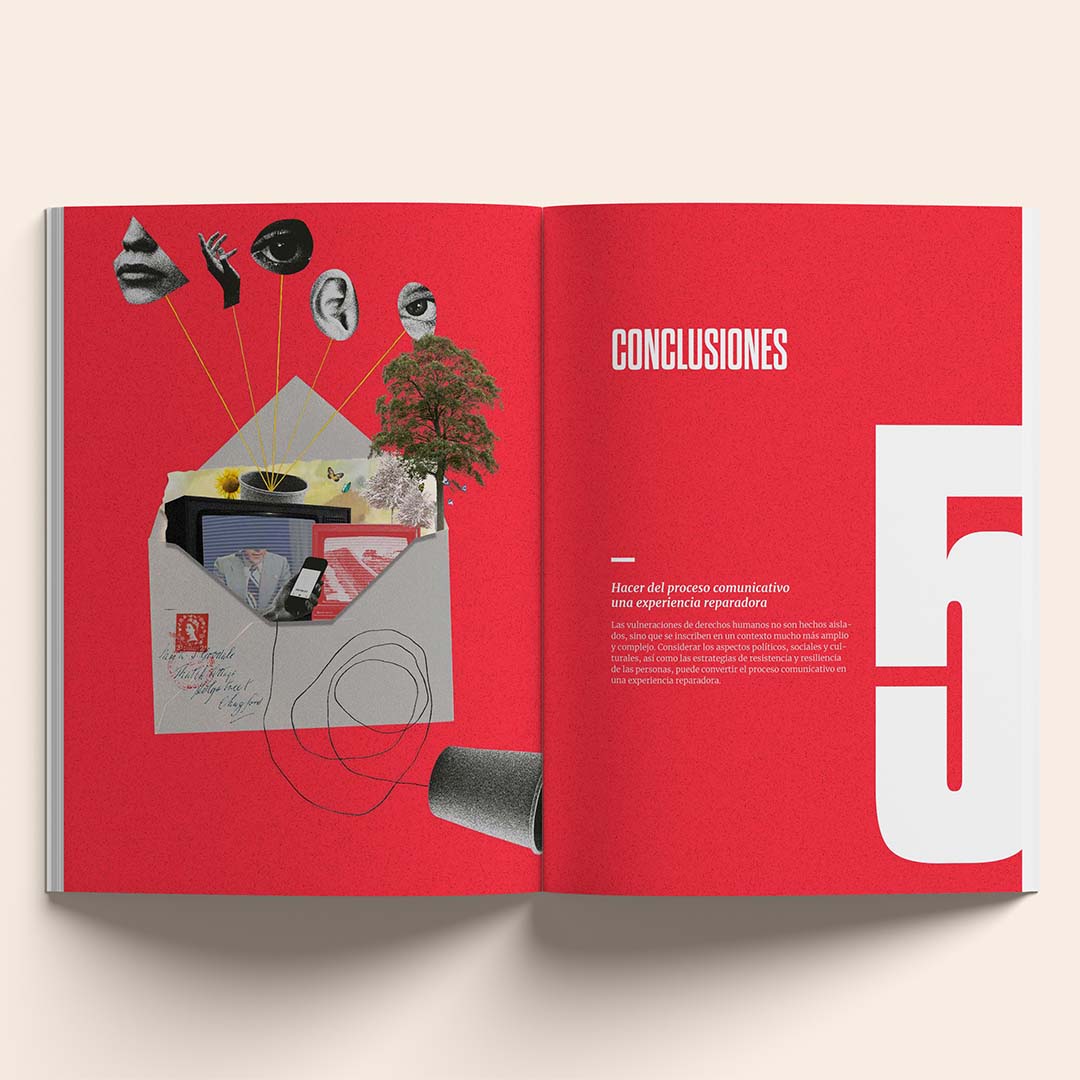
To speak of a psychosocial perspective means to put at the centre the well-being of all the people involved in each stage of the process.
Lluís Elías, Sebas Rodríguez, Esther Fraile and Andrea GalánAuthors of «Hacia una comunicación psicosocial: Guía para integrar la perspectiva psicosocial en procesos comunicativos vinculados con vulneraciones de derechos».