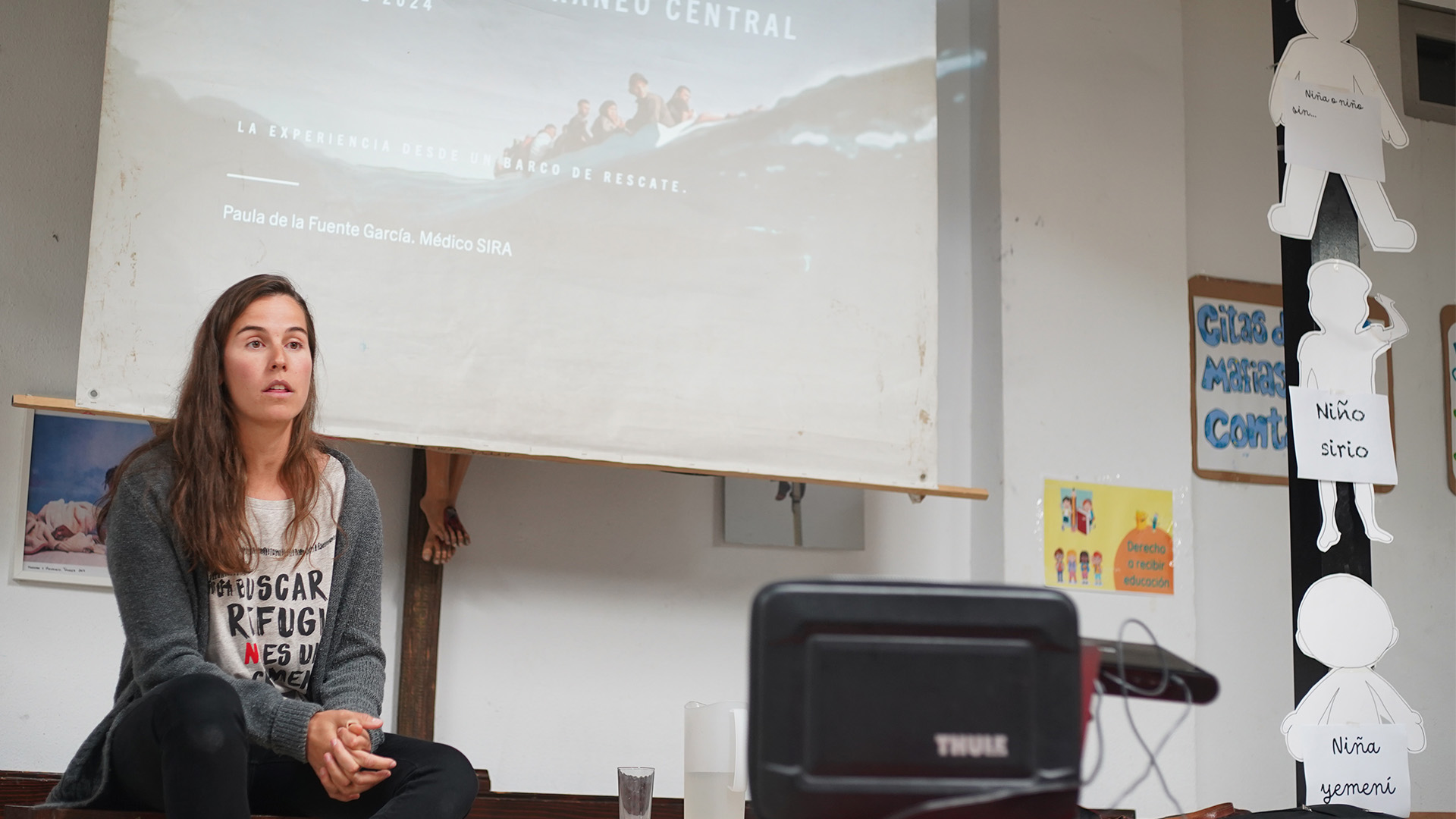
After disembarking a few days ago, the Sira Centre collaborator shared her experience as a doctor on a rescue ship in the Central Mediterranean Sea.
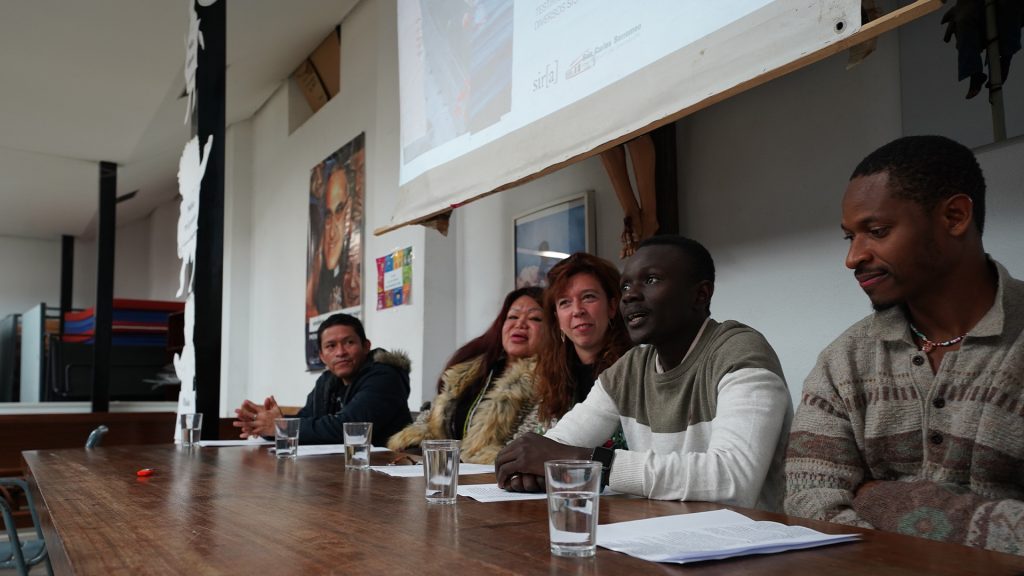
He did so during the event “Psychosocial impacts of migration policies”, in which several people also presented their experiences in different reception systems.
In a day dedicated to addressing the psychosocial impacts of migration policies and, in particular, the resistance strategies that emerge from migrant collectives, the medical Paula de la Fuente shared his experience aboard the Foundation's vessel Solidaire. For more than two months, the Centre's staff member Sira coordinated the medical team of this rescue ship, which remained for more than two months assisting people in transit in the Central Mediterranean Sea. On these routes, at least 884 people have lost their lives. only in the first half of 2024, according to the International Organisation for Migration (IOM).
During her speech, Paula de la Fuente underlined the importance of the network of care that is generated between people throughout the days of the journey. As she explained, once the rescue manoeuvres have been completed, the boats notify the European authorities, who assign a safe port to disembark the rescued people. These ports are often several days away and people on the move use this time to consolidate a network of psychological, physical and social support, crucial to mitigate the impacts of the journey. “They are transit networks, networks of people who support each other along the way and become a fundamental support,” he said.
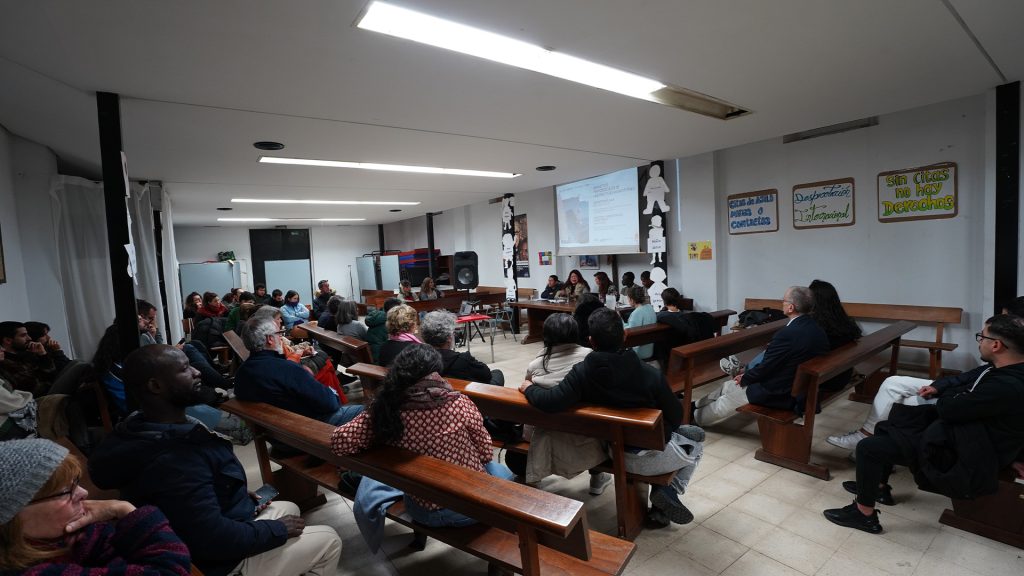
Public attending the event «Psychosocial impacts of migration policies».
Likewise, the doctor explained, during the journey the efforts of the crew, whose objective is to “provide a safe space during the 4 or 5 days that the journey lasts”, are added to the care of the people. During that time, she said, they offer psychological support, information workshops on their rights as applicants for international protection and health care. “Many have not seen a doctor in 2, 3 or 4 years, the time elapsed since they began their migratory journey, and during which they have suffered all kinds of violence”, he stressed.
Reception is not only what the formal system thinks it is.
At a round table dedicated to the psychosocial impacts of migration policies, several people shared their experiences and strategies for dealing with the shortcomings of reception systems. Among the obstacles most highlighted during the meeting were isolation, dehumanising treatment, lack of information on the procedures for administrative regularisation, rigid treatment by professionals and difficulties in preserving and developing their own cultural practices, such as meeting to eat or bringing food from outside the institutions.
Mahamadou Simakha, intercultural mediator, shared his experience as an accompanier within the reception system. “Those of us who accompany within the system have a small margin for action, which has to be used to look for gaps in the system. When I have accompanied others, I have sought to take actions that serve to bring peace or joy. To offer the treatment that I would have liked to receive”.
Gabriela López, coordinator of the Sira Centre, highlighted the importance of community spaces such as the San Carlos Borromeo Parish, where the event was held: “Here people think, collectivise and look for ways to transform this hostile reality”. This type of environment, he explained, allows people to find mutual support and build networks to confront a system that often dehumanises them.