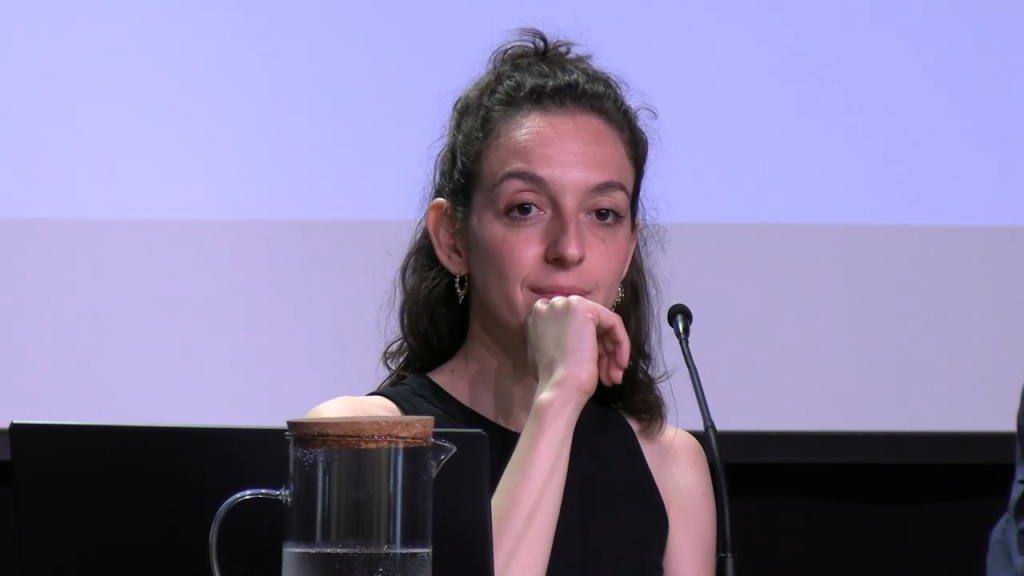
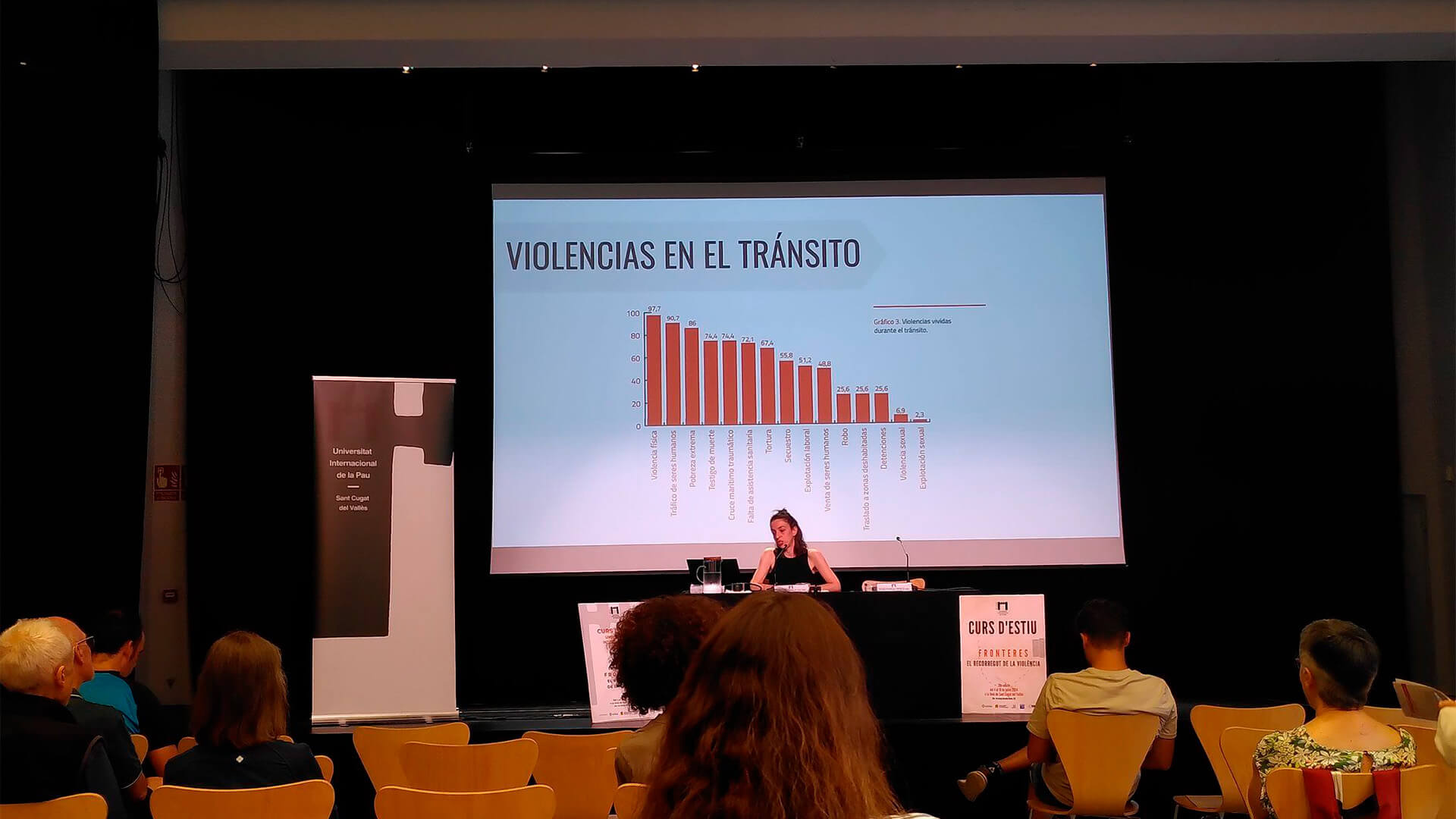
The psychologist from the Sira Centre gave a talk at the 39th Unipau Summer Course, dedicated to the psychosocial impacts generated by migration policies and reception conditions.
People who migrate from Africa to the European Union suffer a number of human rights violations along the way, often resulting in suffering. permanent or intractable. He explained Esther Fraile, head of the area of psychosocial work and migration at the Sira Centre, during her speech at the 39th Unipau Summer Course in Sant Cugat.
In her presentation, Fraile addressed in detail the impacts caused by migration policies and highlighted the need to apply a structural approach. According to the psychologist, it is essential that survivors have the certainty that their experiences are not isolated cases, and that they can demand reparation, justice and guarantees of non-repetition. «A socio-political issue cannot be disguised as a mental health issue», she stressed.
Extreme violence and psychological consequences
Fraile described the many extreme forms of violence faced by people on the move along the way, and emphasised the need to address their psychological consequences. During his intervention, he cited some of the conclusions of the report “.“Labyrinths of Torture”which the Sira Centre developed together with the Community Action Group. The study highlights that a 93% of those interviewed experienced feelings of humiliation and unworthiness, and that almost one third of those interviewed felt that they were 84% presented post-traumatic stress. That is, nightmares, a constant feeling of alertness, or intrusive thoughts related to the extreme violence they have experienced, among others.
The psychologist also stressed that people who migrate from Africa to Europe may have a perception of the world as a hostile and dangerous environment, as a result of their traumatic experiences. Fraile noted that these experiences make many people reluctant to talk about their past. The world ceases to be a fair place and begins to be perceived as a dangerous place,» he said.
Consequences of border externalisation
During her speech, Esther Fraile also addressed the dangers associated with the approval of the new European Pact on Migration and Asylum, which, he stressed, threatens to perpetuate the human rights violations that already occur along the migratory transit. This pact reinforces a logic that prioritises border control over the protection of migrants. «The ultimate expression of this logic is the externalisation of borders», said Fraile.
The psychologist emphasised that these policies have forced migrants to travel increasingly long, violent and costly routes, This prolongs the suffering not only of those who undertake the journey, but also of their families. The harsher routes, coupled with the increased complexity of the transit, create emotional and economic pressure on families, who, forced to support these displacements, experience feelings of guilt, fear and distress. «The more dangerous the road, the more support is needed from the family,» he warned.
Despite this scenario, Fraile insisted that both professionals working to accompany migrants, as well as civil society, should seek to new strategies, The suffering is very great and the care is almost non-existent,« he concluded. »The suffering is very great and the care is almost non-existent," he concluded.