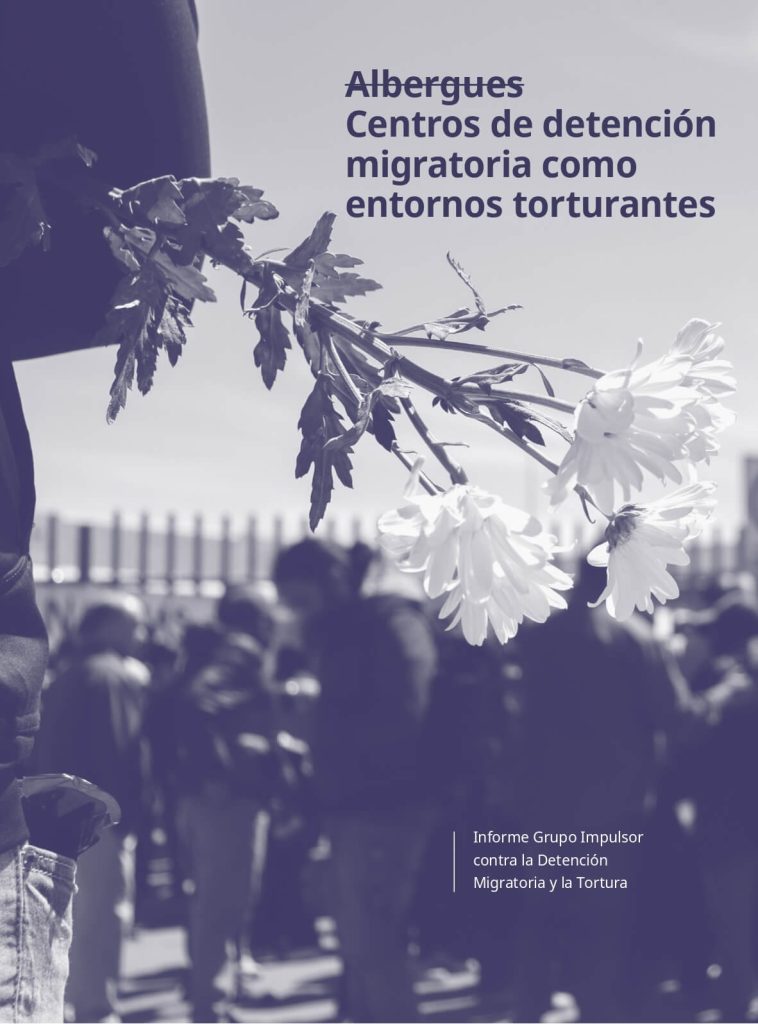
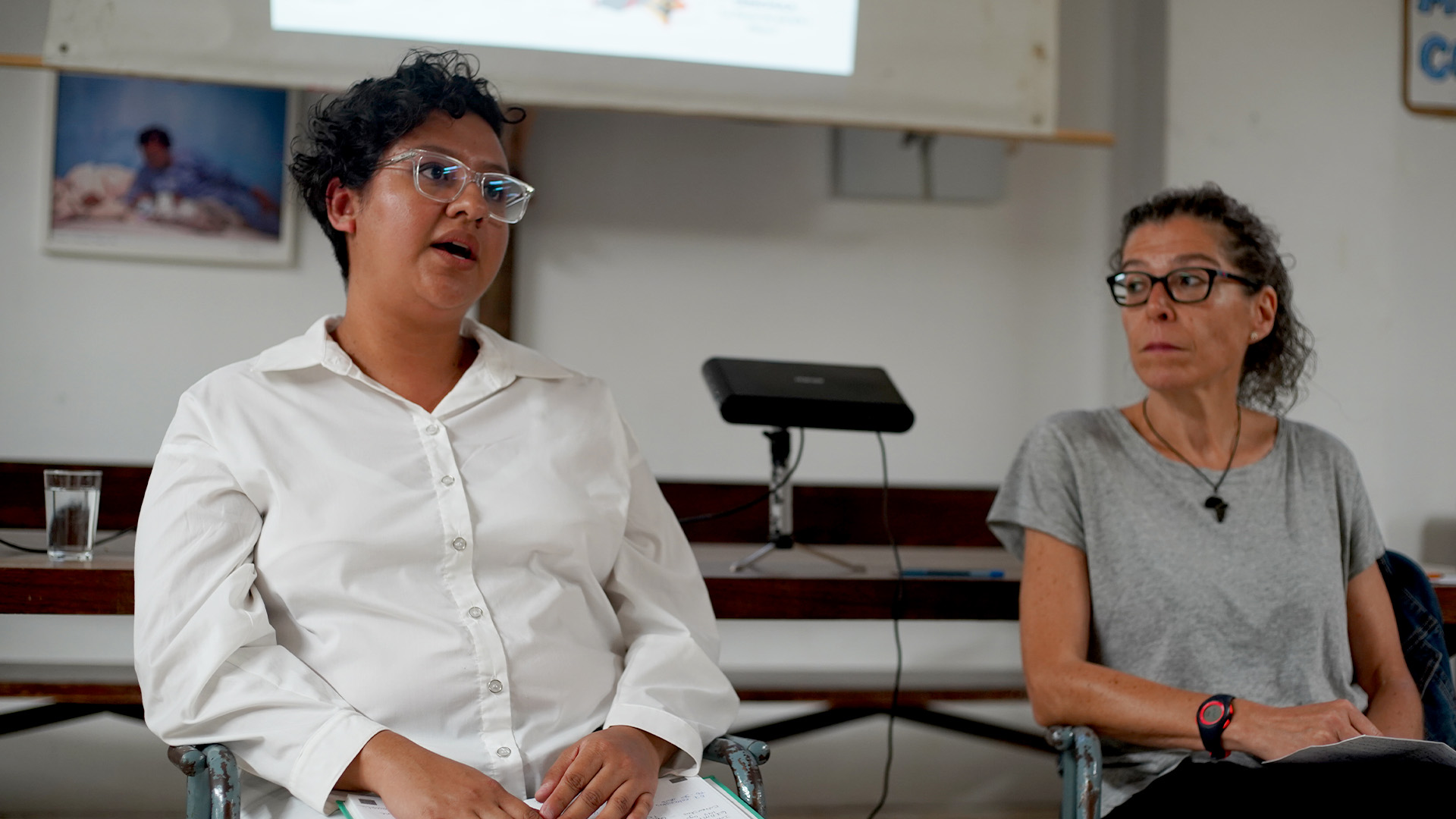
Yuriria Salvador and Josué Gómez, both from the Fray Matías de Córdova Human Rights Centre in Tapachula, Chiapas, presented the results of the report “Centros de detención migratoria como entornos torturantes” (Migration detention centres as torturing environments), which was also written with the participation of members of the Sira Centre team.
On a day dedicated to immigration detention, Belén Santos, from Red Interlavapies and CIEs No, also contextualised the conditions and violence suffered by migrants held in Spain.
In 2021, the Senate of the Republic of Mexico presented an initiative to modify the Migration Law and rename their immigration detention centres. Those known as “migration stations”The "spaces where persons in transit and asylum seekers who are in transit are detained in irregular situation, The name “humanitarian protection centres for migrants” was changed to “humanitarian protection centres for migrants”. Since then, the authorities have used other names such as “secure spaces”, “accommodation spaces” or "shelters", among others. However, these terms are no more than euphemisms to cover up the reality of structures that operate as real "shelters". prison institutions, and where violence, precariousness and systematic human rights violations prevail.
Yuriria Salvador and Josué Gómez, members of the Fray Matías de Córdova Human Rights Centre, denounced this situation during the presentation of the report “....“Immigration detention centres as torturous environments”The Grupo Impulsor Contra la Detención Migratoria y la Tortura (GICDMT), a coalition of various civil society organisations. The Centre, which is based in Tapachula, Chiapas, on the border with Guatemala - a key point for migrants and asylum seekers in the country - accompanies people in transit with legal advice, psycho-emotional support and help with social integration. Its work here is indispensable and urgent. According to the organisation, up to 80% of those seeking international protection from countries such as Guatemala, Venezuela, Nicaragua, Haiti, Cuba and El Salvador enter through this region.
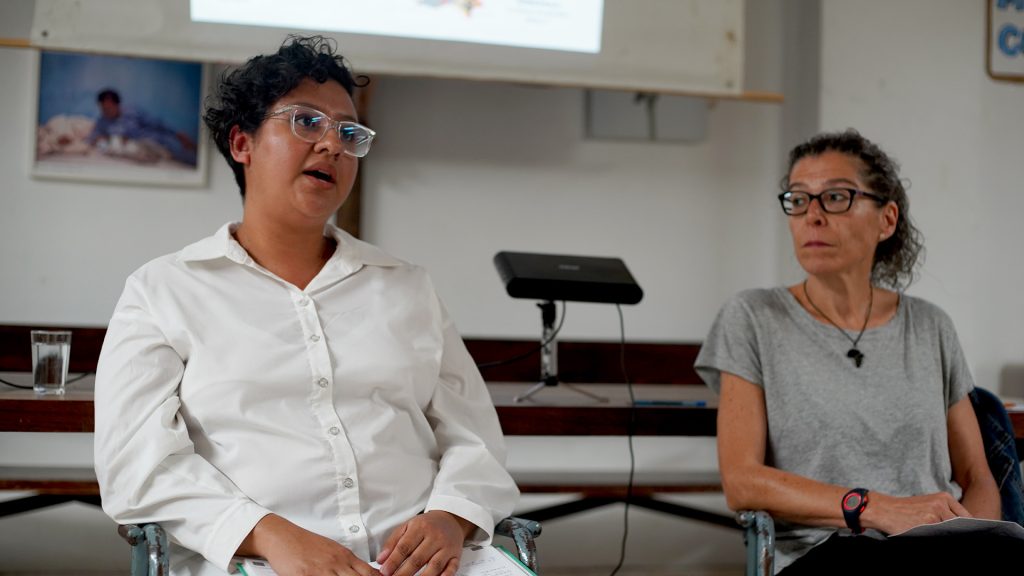
Yuriria Salvador (CDH Fray Matias) and Belén Santos (Red Interlavapies and CIES No).
Torturing Environment
In order to analyse the structure of migration control and detention in Mexico, the Grupo Impulsor Contra la Detención Migratoria y la Tortura (GICDMT) interviewed a total of 57 people (45 men and 12 women) who were or had been detained at a station. Of the total 93% reported being held under conditions subhumanThe situation in the detention centre was very bad: toilets without doors, overcrowding, lack of hygiene, high temperatures and no place to sleep, among other things. “There were only concrete beds, with up to three people on top of them. Most of them slept on the floor”, says one of the testimonies in the report.
On the other hand, 80,7% of respondents report being forced to experience hunger (70%), thirst (30%) or having to limit their need to urinate or defecate (50%). Nearly half of the respondents also report having suffered from a manipulation The detainees are kept in cells with either no windows or permanent artificial light, with no access to a clock. The 82% claimed to have suffered threats of aggression, either towards themselves or their families.
In addition to coercion, up to seven people reported being subjected to sensory deprivation through the use of blindfolds, bags or hoods. “This is a controlled thing. It's meant to make the person disorientated, grow uncertain, despair, and then offer options for voluntary return,” he says. Josué Gómez, of the CDH Fray Matías.
The report details not only the conditions of detention, but also the psychological impacts of detention. More than half of the people interviewed reported experiencing prolonged sadness, as well as feelings of anger, helplessness and, in many cases, even death, guilt. Among the emotional effects of detention were also feelings of fear, distrust, anguish, despair and exhaustion. Some even reported nightmares, hopelessness and even self-harming thoughts.
These findings reveal that the acts and circumstances surrounding immigration detention are not isolated events, but are cumulative and have compounding effects on detainees. These actions aim to breaking the will of those who migrate, leading, in many cases, to serious consequences such as feelings of hopelessness or suicidal thoughts. The report concludes that immigration detention in Mexico is part of an ongoing deterrence policy which perpetuates inequality and fosters feelings of fear and powerlessness linked to detention and deportation. The migratory stations are torturing environments which have a serious impact on the health of detainees.
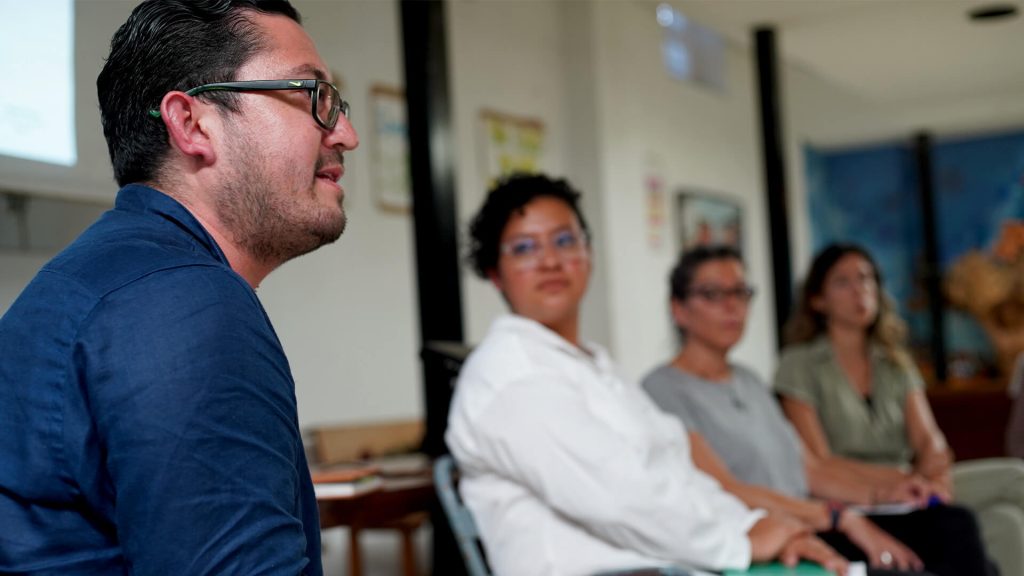
Josué Gómez, Yuriria Salvador, Belén Santos and Andrea Galán during the conference «Retención Migratoria», organised by Centro Sira.
Carousel“ processes”
On 27 March 2023, a devastating fire at the immigration station of Ciudad Juarez ended his life 40 people asphyxiated by smoke and 27 left seriously injured. According to the authorities, the detainees, many of whom had been held in overcrowded conditions for weeks, started a protest by burning some of the mats in the compound. Various journalistic investigations have revealed that officers did not have fire extinguishers to extinguish the fire, that smoke detectors did not work, and that some officers even refused to open cell locks. According to Josué Gómez, In the wake of the impact of this tragedy on public opinion, the Supreme Court of Justice established that immigration detention cannot exceed the maximum length of time a person can be held in detention. 36 hours, in order to ensure the effective protection of the rights of individuals.
However, this measure, which on the surface appears to favour the protection of people on the move, has in practice further reduced their opportunities to apply for asylum or regularise their status. As Josué points out, once released, people face a “...difficult time".“carousel process”designed to weaken their will. After leaving the southern stations, migrants continue their journey north on foot, in buses or in caravans, only to be arbitrarily detained again by police and returned to their point of departure. Experts warn that this strategy seeks to exhaust people in transit emotionally, physically and economically, leading them to give up after multiple attempts, until they decide to return home. “It is a way of blurring deportation.”says Josué Gómez.
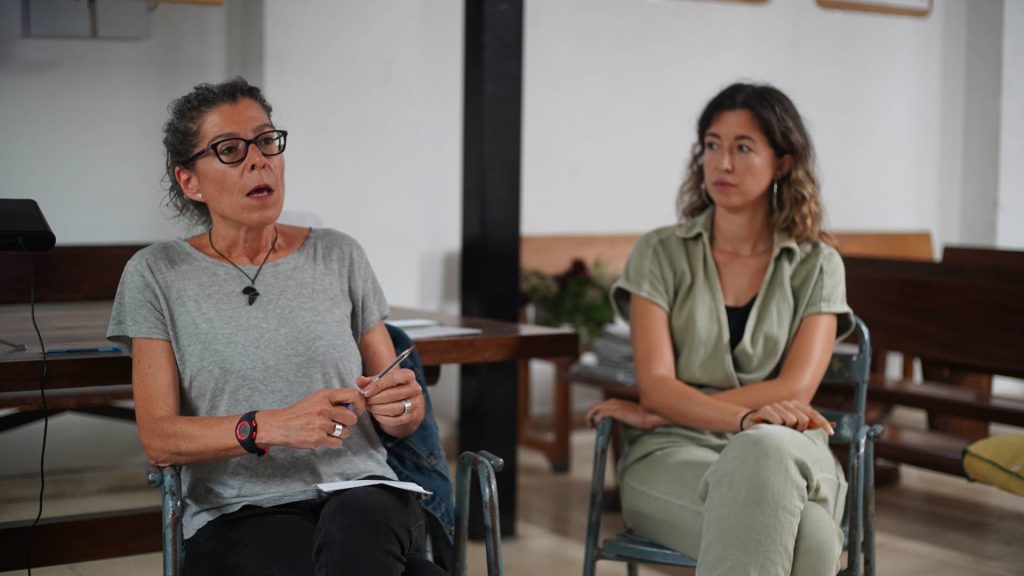
Belén Santos (Interlavapies Network and CIES No) and Andrea Galán (Sira Centre).
36 hours in Mexico, compared to 60 days in Spain
In relation to the situation of the Centros de Internamiento de Extranjeros, Belén Santos, from Interlocking network y CIEs No, She contextualised the serious conditions and violence faced by migrants detained in Spain. Belén denounced the lack of adequate care, highlighting the poor quality of the food and the restrictions they face to leave their cells. She also mentioned the lack of transparency in the resources available, pointing out that until recently there was no video surveillance. “During our visits, we have found people with serious ailments, the result of beatings suffered during their migratory transit or at the hands of the security forces”, said Belén. According to the Jesuit Migrant Service, In 2023, approximately 2,000 people spent an average of 30 days in the CIEs.
In this sense, Belén Santos also emphasised the scarce information provided to migrants. “They are not informed about their rights, nor are they told that they can apply for international protection or go to the Control Judge”, she added.
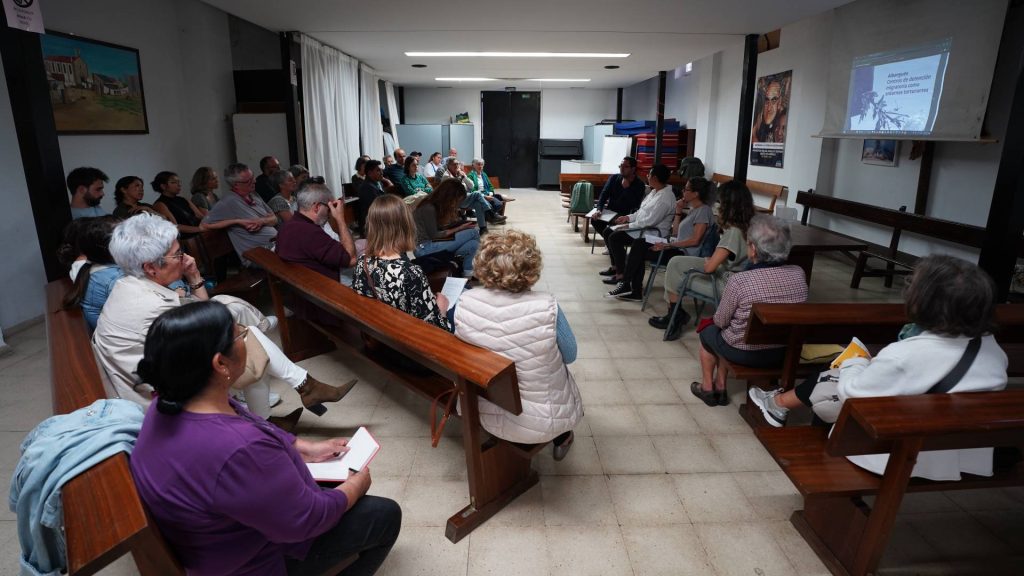
Attendees at the «Retention of Migrants» day, in the Parish of San Carlos Borromeo.
Migration as a business
The participants in the conference underlined the connection between migration and the economic profit generated by private companies as a result of this phenomenon. In the context of Mexico, Josué and Yuriria highlighted the significant presence of companies related to the migration circuit, ranging from security to the maintenance of stations or the transport that migrants are forced to use. According to the experts, those on the move not only face possible cases of corruption and extortion, but also high costs for bus tickets, food and accommodation.
In the case of Europe, as the report notes Who watches the watchman? by Centre Delàs and Centre Irídia, the budget of the European Border and Coast Guard Agency (FRONTEX) has only grown over the last 20 years. According to the document, it has gone from 80,000 euros in 2005 to more than 69 million euros in 2020.
Immigration detention centres as torturous environments
Report of the Migrant Detention and Torture Advocacy Group