
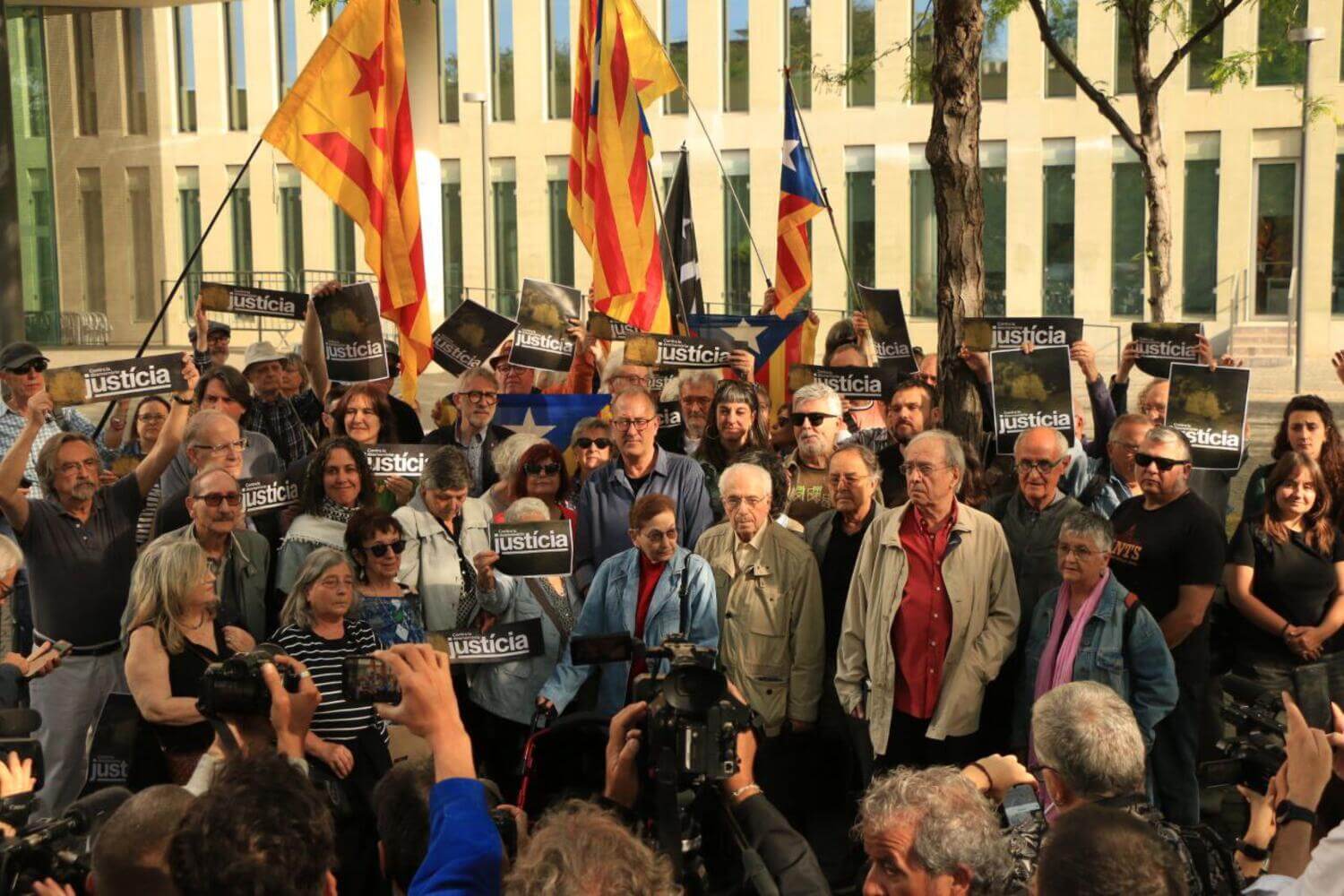
For the first time in Spain, a victim of torture committed during Franco's regime testifies before a prosecutor specialising in historical memory and human rights.
The complaint, presented by Irídia with the support of Òmnium Cultural and the World Organisation Against Torture (OMCT), is supported by an expert report drawn up by the Sira Centre, which accredits the torture suffered by Blanca Serra during her detention at the hands of Franco's police.
Blanca Serra, The 82-year-old Catalan nationalist activist, who has been a militant for 82 years, appeared on Monday 19 May before the Office of the Prosecutor for Democratic Memory and Human Rights. Her statement represents a historic precedent in Spain: it is the first time that a victim of torture during Franco's regime has appeared before a specialised prosecutor in this area. Before testifying, Serra told the media: “Today is a great day for memory and for remembering justice; a day to recover a past that has not yet ended”.”
The complaint is accompanied by a expert's report of the Sira Centre documenting the episodes of violence suffered between 1977 y 1982. The report identifies, among other impacts, symptoms of post-traumatic stress disorder, The report also points out that the patient may be suffering from a variety of symptoms, such as hyperalertness, sleep disturbances, anxiety crises or re-experiencing the trauma. It also points out the vital impacts The torture-related consequences, such as the loss of emotional ties, a constant feeling of insecurity and the abandonment of her personal life project. In spite of the after-effects, the expert report, drawn up by the team of Sira Barcelona, The analytical skills, resilience, endurance, resistance and the strong political commitment of Serra over the years.
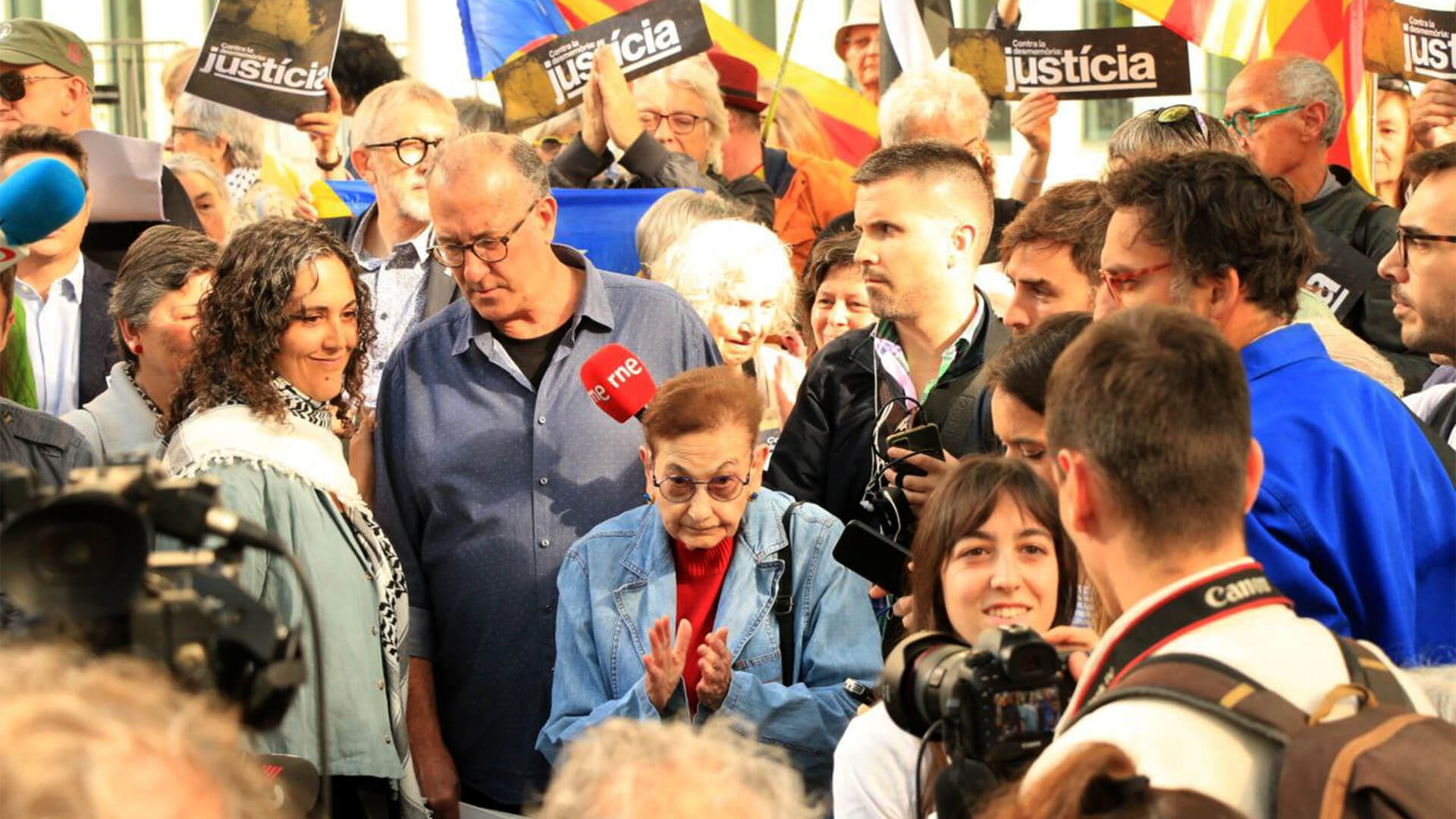
Blanca Serra, in the centre, before entering the court to make a statement. Photo: Borja Lozano (Iridia)
Torture in Via Laietana 43 and in the Directorate General of Security (DGS)
Blanca Serra was detained up to FOUR TIMES, together with his sister Eva Serra, The arrests took place at the end of the year. The arrests took place in the Via Laietana Police Headquarters (Barcelona) and in the Directorate-General for Security (Madrid), two well-known scenes of political repression during the late Franco regime and the transition.
Both were subjected to physical aggression, positional torture, psychological violence and humiliation linked to both their gender and their political identity. According to Serra, “it is important for young people to know what has happened, what is happening and perhaps what will happen”. At the same time, she insisted on the need to “make women and the gender persecution experienced in those spaces of repression visible”.
The director of Iridia, Anaïs Franquesa, The Commission underlined that the facts complained of constitute crimes against humanity and therefore, no statute of limitationsThese crimes must be investigated, tried and convicted. They cannot go unpunished“, he said. Franquesa also reiterated a historical claim of memorial organisations: the reconversion of Via Laietana 43 in a memory centre, free from police presence, managed by human rights organisations.